

Fast Delivery
Quick, reliable shipping to any location.

Free & easy returns
Return this item by mail or in store within 90 days for a full refund.
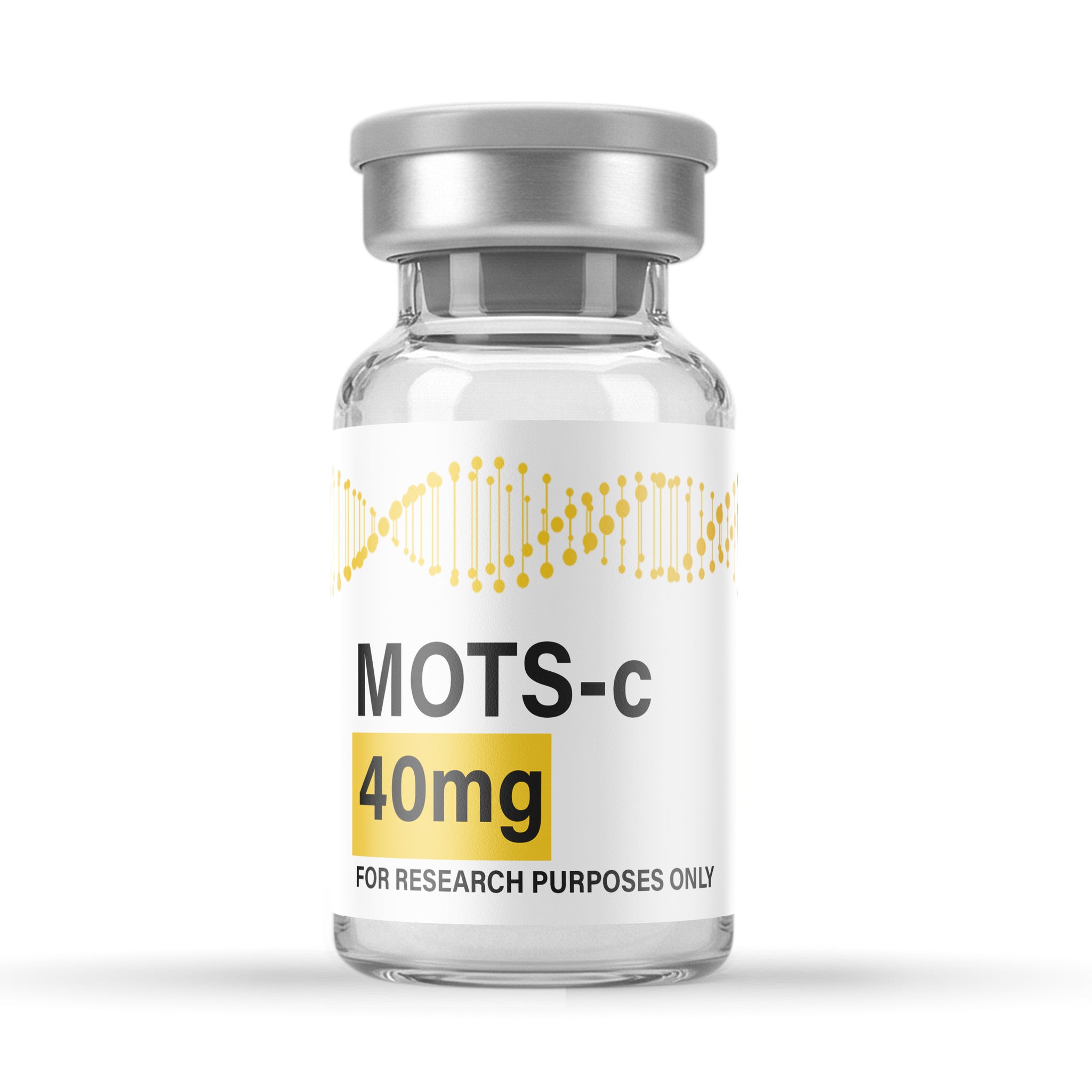
MOTS-c 40 mg – Product Description
The Mitochondrial-Encoded Peptide for Metabolic and Cellular Health Research
MOTS-c 40mg: MOTS-c (Mitochondrial Open Reading Frame of the Twelve S rRNA-c) is a 16-amino acid peptide encoded by the mitochondrial genome, distinguishing it from the vast majority of proteins encoded by nuclear DNA . Discovered relatively recently, MOTS-c functions as a mitochondrial-derived signaling peptide that appears to act as a bridge between mitochondrial health and systemic metabolic regulation . It has captured significant research interest for its role in metabolic homeostasis, insulin sensitivity, exercise performance, and potential longevity applications .
Table of Contents
-
What is MOTS-c?
-
Mechanism of Action
-
Key Research Findings
-
Research Applications
-
Product Specifications
-
Dosing and Administration
-
Safety Profile
-
Frequently Asked Questions (FAQs)
-
References
What is MOTS-c?
MOTS-c is a synthetic peptide with a 16-amino acid sequence (MRWQEMGYIFYPRKLR) and a molecular weight of 2174.60 Da, typically supplied in acetate salt form . It is among a new class of mitochondrial-derived peptides that appear to decline with age, correlating with increased susceptibility to metabolic syndrome and sarcopenia (age-related muscle loss) .
MOTS-c has been described as an “exercise-mimetic” because it can improve glucose uptake in skeletal muscle and enhance insulin sensitivity without requiring insulin .
| Property | Detail |
|---|---|
| Sequence | MRWQEMGYIFYPRKLR (Acetate Salt) |
| Molecular Weight | 2174.60 Da |
| Length | 16 amino acids |
| Form | Lyophilized powder |
| Purity | ≥95% (HPLC); research-grade typically exceeds 99% |
| Storage | -20°C |
| Dissolution | 100% H₂O |
Mechanism of Action
MOTS-c modulates several key pathways crucial for cellular energy balance and stress resilience :
| Mechanism | What It Does | Why It Matters |
|---|---|---|
| AMPK Pathway Activation | Enhances AMPK activity, promoting glucose uptake, fatty acid oxidation, and mitochondrial biogenesis | Fundamental to cellular energy sensing and metabolic regulation |
| Insulin Signaling Modulation | Translocates GLUT4 to improve glucose utilization in skeletal muscle | May translate to better glycemic control |
| Fatty Acid Oxidation | Encourages the body to burn stored fat for fuel | Supports weight management and energy expenditure research |
| Cellular Stress Adaptation | Supports metabolic flexibility during fasting or intense exercise | Relevant for exercise physiology and adaptation studies |
| Inhibition of mTORC1 | Modulates growth signaling pathways | Implicated in longevity and metabolic research |
| Anti-Inflammatory Effects | Down-regulates macrophage migration inhibitory factor (MIF) expression | Contributes to neuroprotective and anti-inflammatory actions |
Key Research Findings
Metabolic Health and Insulin Sensitivity
MOTS-c reduces insulin resistance, prevents obesity, and improves muscle function through multiple signaling pathways including GLUT4 translocation, ERK pathway activation, and STAT3 inhibition . Observational studies have shown that circulating MOTS-c levels decline with age, associated with increased risk of type 2 diabetes and frailty .
Exercise Performance and Muscle Health
In mouse studies, acute MOTS-c treatment significantly enhanced physical capacity in old mice, with treated animals demonstrating markedly improved treadmill running distance and time compared to controls (P = 0.000002) . In physically active human volunteers, higher serum MOTS-c concentrations positively correlated with greater muscle mass, force, and power generated during jumping exercises .
Neuroprotection
MOTS-c has demonstrated notable antinociceptive and anti-inflammatory effects . In traumatic brain injury models, peripheral administration of MOTS-c reduced inflammatory responses, molecular damage, and cell death while improving memory, learning, and motor function .
Age-Related Macular Degeneration Research
In retinal pigment epithelial cells, MOTS-c showed dose-dependent effects on apoptosis, inflammation, and mitochondrial biogenesis. Lower doses (500 nM) demonstrated more significant impacts than higher concentrations (5 µM) .
Pain Research
MOTS-c treatment attenuated mechanical pain hypersensitivity in diabetic neuropathy models, with dose- and time-dependent antinociceptive effects observed across multiple administration routes .
Human Studies
-
Breast Cancer Survivors: A 16-week exercise intervention significantly increased MOTS-c levels in non-Hispanic White participants, associated with reductions in fat mass, body weight, and improved metabolic profiles .
-
Muscle Strength: In physically active volunteers, higher MOTS-c levels correlated positively with muscle force and power, but not with maximal oxygen uptake .
Research Applications
| Application | Research Focus |
|---|---|
| Metabolic Health | Insulin sensitivity, glucose regulation, metabolic syndrome |
| Aging and Longevity | Age-related decline, healthspan, sarcopenia |
| Exercise Performance | Muscle function, endurance, physical capacity |
| Neuroprotection | Traumatic brain injury, cognitive function, neuroinflammation |
| Cellular Stress | Oxidative stress adaptation, mitochondrial function |
Product Specifications
| Specification | Detail |
|---|---|
| Product Name | MOTS-c Peptide |
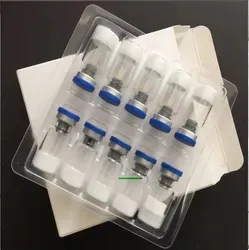
| Size | 40 mg (typically 10 vials of 4 mg) |
| Grade | Research Use Only (RUO) |
| Form | Lyophilized powder |
| Purity | >95% (HPLC); typical purity ≥99.6% |
| Molecular Weight | 2174.60 Da |
| Sequence | MRWQEMGYIFYPRKLR (Acetate Salt) |
| Dissolution | 100% H₂O |
Dosing and Administration
| Aspect | Detail |
|---|---|
| Route | Subcutaneous injection (research protocols) |
| Research Doses (Animal) | 0.1–5 mg/kg (intraperitoneal) ; 15 mg/kg/day (mouse studies) |
| In Vitro Doses | 500 nM (low) to 5 µM (high) |
Storage Guidelines — Lyophilized powder should be stored at -20°C. Reconstituted peptide should be refrigerated and used promptly .
Safety Profile
MOTS-c is generally well-tolerated in research settings, but human data remain limited .
Key Considerations
-
Short Human Studies: Human studies have evaluated MOTS-c for brief periods only; long-term safety and efficacy data are lacking .
-
Dose-Dependent Effects: In retinal pigment epithelial cell research, lower doses (500 nM) demonstrated more significant impacts than higher concentrations (5 µM), suggesting potential biphasic response patterns .
-
Individual Variability: Differences in mitochondrial genetics, comorbid conditions, and age may influence individual responses .
Contraindications and Precautions
-
Not FDA-Approved: MOTS-c is not FDA-approved for human therapeutic use. All clinical use is investigational .
-
Formulation Challenges: As a short peptide, effective non-invasive or oral delivery remains a significant challenge .

Frequently Asked Questions (FAQs)
1. What is MOTS-c used for in research?
MOTS-c is studied primarily for metabolic health (insulin sensitivity, glucose regulation), aging and longevity (muscle preservation, healthspan), exercise performance (endurance, muscle function), and neuroprotection (cognitive health, brain injury) .
2. How does MOTS-c work?
It works primarily by activating the AMPK pathway, which promotes glucose uptake, fatty acid oxidation, and mitochondrial biogenesis . It also modulates insulin signaling and helps cells adapt to metabolic stress .
3. Does MOTS-c decline with age?
Yes. Observational studies show that circulating MOTS-c levels decline with age, which is associated with increased risk of age-related diseases such as type 2 diabetes and frailty .
4. Is MOTS-c an “exercise mimetic”?
MOTS-c has been described as an “exercise-mimetic” because it can improve glucose uptake in skeletal muscle and enhance insulin sensitivity without requiring insulin . It induces adaptations similar to those observed with physical activity.
5. How is MOTS-c stored and reconstituted?
Lyophilized MOTS-c should be stored at -20°C. It can be dissolved in 100% H₂O . Bacteriostatic water is commonly used for reconstitution in research protocols .
6. What is the purity of research-grade MOTS-c?
Research-grade MOTS-c typically has purity >95% by HPLC, with many batches exceeding 99% purity .
7. Are there human studies on MOTS-c?
Yes, though limited. Studies have examined MOTS-c levels in breast cancer survivors following exercise intervention and correlated serum MOTS-c with muscle strength in physically active individuals . However, large-scale human trials remain limited .
8. Is MOTS-c FDA-approved for human use?
No. MOTS-c is a research peptide and is not FDA-approved for human therapeutic use. It is strictly intended for laboratory research .
References
-
XPMutations. MOTS-C Research Peptide – Product Information
-
Hum Cell. Exploring the therapeutic potential of MOTS-c in age-related macular degeneration. 2025;38(2):57
-
NIH/PMC. MOTS-c treatment attenuates STZ-induced mechanical pain hypersensitivity – Figure 2
-
NIH/PMC. Metabolites. MOTS-c Physiological Functions – Figure 1. 2023
-
NovoPro. MOTS-c Peptide Certificate of Analysis – Cat.# 319017
-
AMDAlliance. MOTS-c: Mitochondrial Peptide Therapy for Muscle and Cellular Health. 2026
-
Li F, et al. Neuroprotective Mechanism of MOTS-c in TBI Mice. Drug Des Devel Ther. 2024
-
Kaiser Medical Management. MOTS-C 40mg – Product Information. 2026
-
Sara Szal MD. The Scientific Evidence of Peptide Therapy: MOTS-c. 2025
-
NIH/PMC. Acute MOTS-c treatment enhances physical capacity in old mice – Figure 3








Reviews
There are no reviews yet.