



Fast Delivery
Quick, reliable shipping to any location.

Free & easy returns
Return this item by mail or in store within 90 days for a full refund.
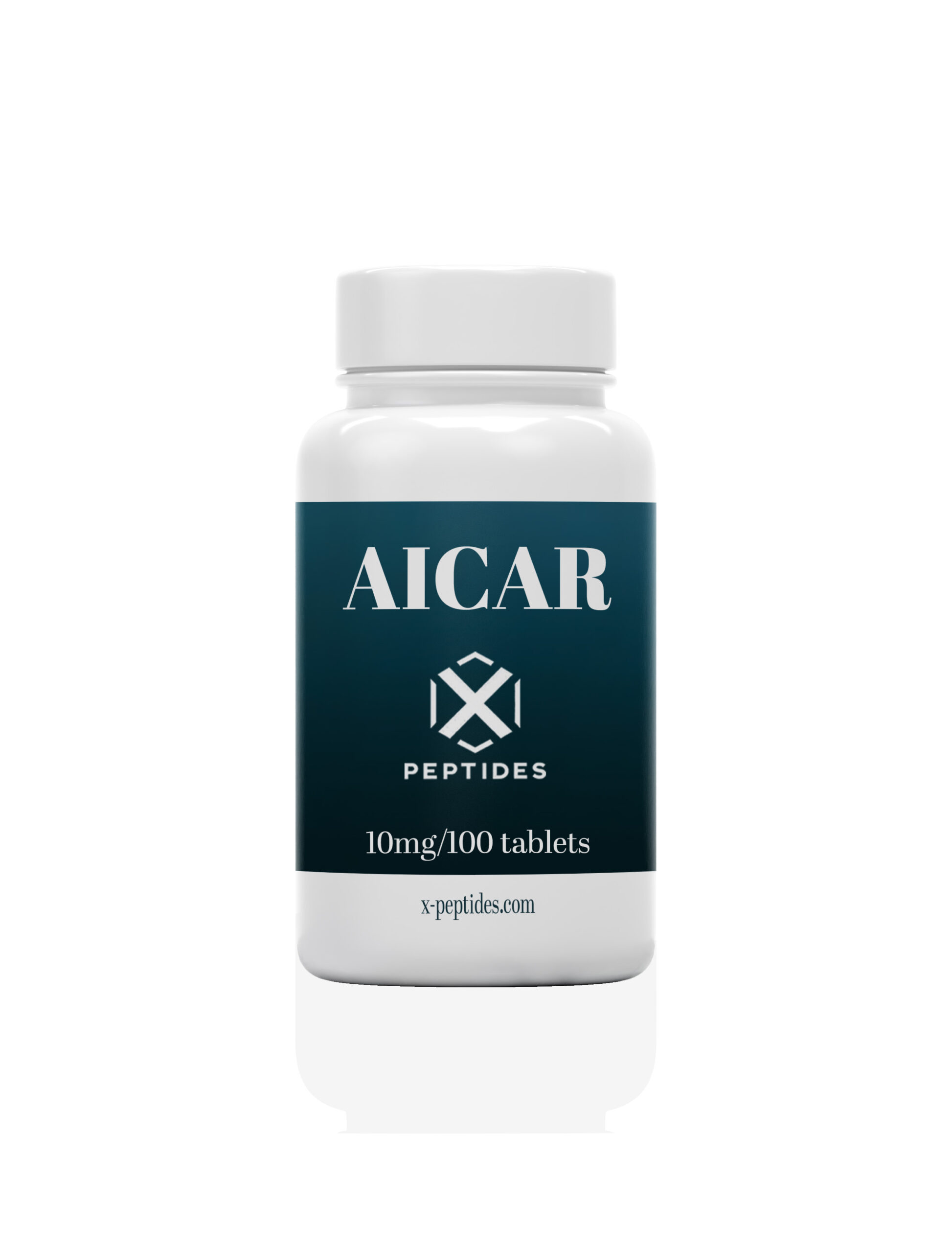
AICAR Peptide: The Exercise-Mimetic AMPK Activator for Metabolic Research
AICAR (5-aminoimidazole-4-carboxamide ribonucleoside) is a cell-permeable nucleoside analog and a widely used activator of AMP-activated protein kinase (AMPK), the body’s primary cellular energy sensor. This research compound has gained significant attention in preclinical studies for its ability to mimic the metabolic effects of exercise, making it a valuable tool for investigating metabolic disorders, diabetic complications, and age-related decline.
Table of Contents
-
What is AICAR?
-
Mechanism of Action
-
Key Research Applications
-
Diabetic Polyneuropathy
-
Metabolic Syndrome and Fatty Liver
-
Endurance and Muscle Performance
-
Anti-Inflammatory Effects
-
-
Research Dosing Guidelines
-
WADA Prohibited Status
-
Safety Profile and Considerations
-
Frequently Asked Questions
-
Conclusion
What is AICAR?
AICAR (5-aminoimidazole-4-carboxamide ribonucleoside) is a cell-permeable adenosine analog that functions as a potent activator of AMPK. When AICAR enters a cell, it is converted to ZMP, which mimics AMP and activates AMPK and its downstream targets. This activation switches on catabolic processes that generate ATP while switching off ATP-consuming processes, effectively mimicking the cellular response to energy stress like exercise.
AICAR is classified as a research compound and has no FDA-approved indications for human use. The World Anti-Doping Agency (WADA) has listed it as a banned substance since 2009 due to its assumed performance-enhancing properties.
Mechanism of Action
AICAR’s primary mechanism involves activation of AMPK, a key regulator of cellular energy homeostasis:
-
Cellular Uptake: AICAR enters cells via adenosine transporters
-
Conversion: Inside the cell, it is phosphorylated to ZMP (AICAR monophosphate)
-
AMP Mimicry: ZMP mimics AMP, binding to AMPK and triggering activation
-
Metabolic Effects: Activated AMPK promotes fatty acid oxidation, glucose uptake, and mitochondrial biogenesis
Beyond AMPK activation, research has identified AMPK-independent mechanisms, including inhibition of the PI3-kinase/Akt pathway in macrophages, contributing to anti-inflammatory effects.
Key Research Applications
Diabetic Polyneuropathy (DPN)
A landmark 2025 study from Johns Hopkins University demonstrated that AICAR treatment prevented and reversed experimental diabetic peripheral neuropathy in mouse models of both Type 1 and Type 2 diabetes. Key findings include:
-
3-fold increase in AMPK phosphorylation in DRG neuronal extracts (p < 0.001)
-
2-fold increase in autophagy markers (LC3-II)
-
Restored mitochondrial respiration in DRG neurons (240 ± 30 nmol O2/min vs. 120 ± 20 in untreated HFD mice)
AICAR’s protection was mediated by effects on insulin sensitivity, glucose metabolism, and lipid metabolism, suggesting it could serve as an exercise mimetic for patients unable to exercise due to neuropathic foot pain.
Metabolic Syndrome and Fatty Liver Disease
Research published in 2024 investigated AICAR’s effects on high-fat, high-fructose diet-induced fatty liver in mice. AICAR administration (150 mg/kg/day, i.p.) resulted in:
-
Significantly reduced cholesterol and free fatty acid levels
-
Increased bilirubin levels
-
Downregulated α-SMA expression (a marker of fibrosis)
-
Upregulated PPAR-α mRNA expression
These findings suggest AICAR regulates lipid metabolism, fibrogenesis, and overall liver integrity.
Endurance and Muscle Performance
AICAR has been studied for its potential to enhance physical performance. In aged mice (23 months), AICAR administered at 300-500 mg/kg (incrementally increased) over 31 days prevented decline in treadmill running capacity and increased ex vivo muscle force production. It has been shown to induce expression of numerous genes in muscle cells and enhance fatty acid oxidation.
Anti-Inflammatory Effects
Research has demonstrated AICAR’s anti-inflammatory properties, including inhibition of LPS-induced TNF-alpha production in macrophages, with effects independent of AMPK activation and associated with inhibition of the PI3-kinase/Akt pathway.
Research Dosing Guidelines
The most frequently reported effective dose of AICAR in mouse models ranges from 300-500 mg/kg, administered daily via intraperitoneal (IP) or subcutaneous (SC) injection.
| Mouse Model | Dosage | Route & Frequency | Duration | Key Outcomes |
|---|---|---|---|---|
| HFD-induced DPN | 500 mg/kg | IP, daily | 2-4 months | Prevented/reversed neuropathy; 3-fold AMPK increase |
| HFD-induced Obesity | 500 mg/kg | IP, 3x/week | 8 weeks | Reduced adipose inflammation, glucose tolerance |
| Aged Mice (23 months) | 300-500 mg/kg | SC, daily | 31 days | Improved running capacity, muscle force |
| ob/ob Mice | 500 mg/kg | IP, daily | 14 days | Improved translational capacity |
| HFFD-induced Fatty Liver | 150 mg/kg | IP, daily | 2 weeks | Reduced lipids, fibrosis markers |
WADA Prohibited Status
AICAR has been on WADA’s Prohibited List since 2009:
-
2009: Added to Class M3, “gene doping”
-
2012: Moved to Class S4, “hormone and metabolic modulators”
Detection methods include urine quantitation (baseline established at 2,186 ng/mL) and blood testing, with red blood cell accumulation offering a longer detection window.
Safety Profile and Considerations
Observed Effects
-
Muscle Lactic Acid: AICAR treatment leads to substantial increase of lactic acid in muscles
-
Limited Human Data: Only limited tests have been done on humans, and long-term consequences remain unknown
-
Hypertension Research: A 2025 study found AICAR did not attenuate hypertension in DOCA-salt hypertensive rats despite increased AMPK activation
Regulatory Status
| Aspect | Status |
|---|---|
| FDA Approval | Not approved for human use |
| WADA Status | Prohibited (Class S4) |
| Clinical Status | Preclinical research only |
| Human Trials | Limited; no approved applications |
ADME Properties
| Property | Value |
|---|---|
| Human Intestinal Absorption | 18.27% |
| Caco-2 Permeability | 6.80 nm/s |
| Plasma Protein Binding | 5.12% |
| Blood-Brain Barrier Penetration | 0.63 (Cb/Cb) |
| CYP3A4 Inhibition | Inhibitor |
Frequently Asked Questions
What is AICAR and how does it work?
AICAR is a cell-permeable AMPK activator that mimics the metabolic effects of exercise. It converts to ZMP inside cells, which activates AMPK and promotes fatty acid oxidation, glucose uptake, and mitochondrial biogenesis.
Is AICAR FDA-approved?
No, AICAR is not FDA-approved for human use. It is a research compound used exclusively in preclinical studies.
What does the research show about AICAR?
Preclinical research demonstrates AICAR can prevent and reverse diabetic neuropathy, reduce fatty liver, improve muscle performance in aged mice, and provide anti-inflammatory effects. However, all evidence comes from animal studies.
Is AICAR banned in sports?
Yes, AICAR has been on WADA’s Prohibited List since 2009 as a hormone and metabolic modulator (Class S4).
What are the typical research dosages?
Mouse studies typically use 300-500 mg/kg daily via IP or SC injection. Lower doses (150 mg/kg) have been used for fatty liver research.
Does AICAR have side effects?
AICAR causes substantial increase in lactic acid in muscles. Long-term human safety data is lacking, and its use in hypertension models has shown limited efficacy.
Can AICAR replace exercise?
In animal models, AICAR mimics several metabolic effects of exercise, including AMPK activation and fatty acid oxidation. However, no human data confirms this effect, and WADA bans it for performance enhancement.
Conclusion
AICAR represents a promising research compound for investigating AMPK-mediated metabolic pathways and their therapeutic potential. Preclinical studies demonstrate efficacy in diabetic neuropathy, fatty liver disease, and age-related physical decline. However, AICAR remains a research compound only, with limited human data and WADA prohibition for athletic use. Researchers should consider the established dosing protocols and safety considerations when designing studies.








Reviews
There are no reviews yet.