





Fast Delivery
Quick, reliable shipping to any location.

Free & easy returns
Return this item by mail or in store within 90 days for a full refund.
Buy 5-Amino-1MQ: A Comprehensive Guide to the NNMT Inhibitor for Metabolism and Muscle Health
5-Amino-1MQ is a selective small-molecule inhibitor of nicotinamide N-methyltransferase (NNMT) that has garnered significant attention in the research community for its potential metabolic and muscle-regenerative properties. This guide provides an in-depth look at the science, research findings, and practical considerations surrounding this compound.
What is 5-Amino-1MQ?
5-Amino-1MQ (5-amino-1-methylquinolinium) is a membrane-permeable, selective small-molecule inhibitor of nicotinamide N-methyltransferase (NNMT). It is a synthetic organic compound, specifically a methylquinolinium salt, developed through medicinal chemistry optimization of NNMT-inhibitor scaffolds. It is classified as a research compound and has no FDA-approved indications.
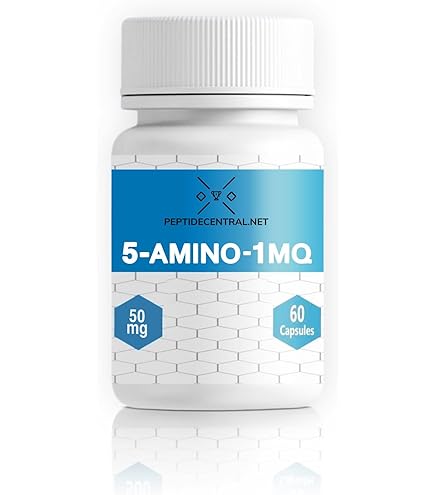
The compound is available in several forms, including as an iodide salt (5-Amino-1-methylquinolinium iodide), with a note that 1.89 mg of the iodide salt contains 1 mg equivalent of 5-amino-1MQ.
How Does 5-Amino-1MQ Work?
The NNMT Mechanism
Nicotinamide N-methyltransferase (NNMT) is an enzyme that transfers a methyl group from S-adenosylmethionine (SAM) onto nicotinamide, producing 1-methylnicotinamide and S-adenosylhomocysteine (SAH). SAM is the cell’s primary methyl donor, required for DNA, histone, and multiple metabolic intermediate methylation.
When NNMT is highly active, it depletes SAM, reducing the cell’s methylation capacity. In adipose tissue, this affects gene expression and energy metabolism in fat cells. This mechanism is particularly relevant in obesity, where NNMT expression in white adipose tissue and liver rises substantially.
Mechanism of Inhibition
5-Amino-1MQ achieves selective NNMT inhibition while remaining membrane-permeable, a critical property since NNMT operates intracellularly. The quinolinium scaffold of 5-Amino-1MQ is designed to bind the NNMT active site specifically, leaving other SAM-dependent enzymes largely unaffected at studied concentrations.
The compound demonstrates an IC50 value of 1.2 μM and reduces 3T3-L1 lipogenesis with an EC50 of 30 μM. In fully differentiated adipocytes, it shows concentration-dependent inhibition of NNMT with an EC50 of 2.3 μM.
Selectivity Profile
5-Amino-1MQ exhibits high selectivity for NNMT without affecting related methyltransferases or enzymes in the NAD+ salvage pathway. Studies confirm it does not inhibit:
-
DNA methyltransferase 1 (DNMT1)
-
Protein arginine methyltransferase 3 (PRMT3)
-
Catechol-O-methyltransferase (COMT)
-
Nicotinamide phosphoribosyltransferase (NAMPT)
-
SIRT1
This selectivity is crucial for maintaining normal methylation biology and NAD+ salvage pathway function while targeting NNMT specifically.
What the Research Shows
In Vitro Studies
In cell-based studies, 5-Amino-1MQ treatment results in concentration-dependent reduction in intracellular 1-methylnicotinamide (MNA) levels. At inhibitor concentrations ranging from 10-60 μM, intracellular MNA levels stabilize at approximately 40% of untreated adipocyte levels.
Notably, NNMT inhibition increases intracellular concentrations of NAD+ and SAM in differentiated adipocytes. Treatment with 5-amino-1MQ results in:
-
NAD+ increase: 1.2 to 1.6-fold increase relative to control adipocytes
-
SAM increase: Significant increase at higher inhibitor concentrations
In Vivo Studies
Diet-Induced Obesity (DIO) Research
A pivotal 2018 study published in Biochemical Pharmacology demonstrated that 5-Amino-1MQ administration to diet-induced obese C57BL/6 mice at 20 mg/kg three times daily subcutaneously over 11 days reversed obesity. Key findings included:
-
Significant body weight reduction (p < 0.05)
-
Decreased white adipose mass (p < 0.01)
-
No changes in food intake
-
Lowered plasma total cholesterol (p < 0.05)
-
Decreased adipocyte size (p < 0.0001)
The treated mice showed a cumulative weight loss of 2.0 ± 0.6g (approximately 5.1% weight loss from baseline) compared to control mice showing a 0.6 ± 0.4g weight gain (approximately 1.4% increase from baseline). Food intake remained the same between groups, suggesting the weight loss effect is primarily related to altered metabolism.

Muscle Regeneration Research
A 2019 study extended NNMT inhibitor research to aged skeletal muscle in 24-month-old mice. Findings demonstrated:
-
Elevated muscle stem cell proliferation and fusion
-
Nearly 2-fold greater cross-sectional area
-
Approximately 70% increase in peak tibialis anterior torque
Subcutaneous injection of NNMTi at 5 mg/kg and 10 mg/kg for two weeks significantly improved muscle regeneration post-injury, with no systemic toxicity observed.
Combination with Caloric Restriction
Subsequent studies examined 5-Amino-1MQ in combination with dietary intervention. When paired with lean-diet substitution, the combination significantly reduced body weight and fat mass (both p < 0.0001) and lowered liver fat content beyond either intervention alone.
Human Research Status
As of April 2026, no human trials for 5-Amino-1MQ have been published or registered. The evidence base consists entirely of animal studies and in vitro work. Preclinical findings in mice frequently do not replicate in humans, particularly in metabolic research.
Dosing Considerations
Research Animal Dosing
Animal studies have utilized the following dosing protocols:
-
Metabolic studies: 20 mg/kg/d subcutaneous administration
-
Muscle injury research: 5 or 10 mg/kg twice daily subcutaneous
-
Safety assessment: No adverse effects observed up to 60 mg/kg/d in animals
Anecdotal Human Dosing
Despite the absence of human trials, anecdotal reports from research communities suggest various dosing approaches:
-
Some users report beginning at 50mg orally, with some increasing to 100mg or even 150mg daily
-
Anecdotal recommendations range from 25mg to 150mg per day orally
-
Some researchers report using 1mg subcutaneously six days per week
-
One clinic plan suggests 50mg capsules taken once daily in the morning on an empty stomach
It’s important to note that these are anecdotal reports, not scientifically validated dosing protocols. The significant variation in reported doses reflects the lack of established human dosing guidelines.
Anecdotal Experiences
User experiences vary considerably. While some report positive effects, others note no noticeable benefits:
Reported Positive Experiences:
-
Some users report noticeable fat loss and increased lean muscle mass with no significant side effects
Reported Negative/Neutral Experiences:
-
One user reported taking 50mg initially, then 100mg for a week, and 150mg for remaining weeks with no change in body weight, body composition, strength, or hypertrophy
-
Multiple users express frustration with the compound’s cost, noting that effective anecdotal doses may be cost-prohibitive for many
-
Some users report no effects even at higher doses of 100-150mg daily

Safety Profile
Preclinical Safety Data
In animal studies, 5-Amino-1MQ demonstrated a favorable safety profile:
-
No systemic toxicity observed with daily dosing for one week
-
Normal levels of glucose, cholesterol, plasma proteins, and electrolytes maintained
-
No adverse effects reported at doses up to 60 mg/kg/d
Considerations and Limitations
-
Regulatory Status: Not FDA-approved for any indication
-
Research Stage: Preclinical only; no human trials published
-
Availability: Distributed through gray-market research chemical vendors; not available by prescription
-
Unknown Human Risks: Any use outside a supervised research setting carries unknown risks
Frequently Asked Questions
What is the primary mechanism of 5-Amino-1MQ?
5-Amino-1MQ acts as a selective inhibitor of the enzyme nicotinamide N-methyltransferase (NNMT). By inhibiting NNMT, it preserves S-adenosylmethionine (SAM) levels and shifts cellular metabolism toward fat oxidation and energy expenditure.
Is 5-Amino-1MQ FDA-approved?
No, 5-Amino-1MQ is not FDA-approved for any indication. It is a preclinical research compound with no published human trials as of April 2026.
What does the research show about 5-Amino-1MQ?
Research demonstrates efficacy in animal models for reversing diet-induced obesity, improving muscle regeneration, and enhancing muscle stem cell function. However, all research is preclinical, conducted in mice and cell cultures.
Are there any human studies on 5-Amino-1MQ?
As of April 2026, no human trials have been published or registered. All evidence comes from animal studies and in vitro work.
What are the typical research dosages?
Animal studies used 20 mg/kg/d for metabolic effects and 5-10 mg/kg for muscle regeneration research. Anecdotal reports suggest oral doses ranging from 25-150mg daily in humans, though these are not scientifically validated.
What is the chemical form of 5-Amino-1MQ?
5-Amino-1MQ is a synthetic organic compound, specifically a methylquinolinium salt. It is often available as 5-Amino-1-methylquinolinium iodide. Note: 1.89 mg of the iodide salt contains 1 mg equivalent of 5-amino-1MQ.
Are there side effects associated with 5-Amino-1MQ?
Animal studies report no adverse effects up to 60 mg/kg/d. However, human safety data is nonexistent, and any use outside research carries unknown risks.
What is NNMT and why is it important?
NNMT is an enzyme that transfers methyl groups from SAM to nicotinamide. When highly active, it depletes SAM, reducing the cell’s methylation capacity. In obesity, NNMT expression rises substantially in adipose tissue, which may contribute to metabolic dysfunction.
Does 5-Amino-1MQ affect the NAD+ pathway?
Research shows 5-Amino-1MQ increases intracellular NAD+ levels by 1.2 to 1.6-fold in cell studies. It does not inhibit NAMPT, a key enzyme in the NAD+ salvage pathway.
How is 5-Amino-1MQ typically sourced?
It is distributed through gray-market research chemical vendors and not available by prescription from licensed compounding pharmacies with established clinical protocols.
Conclusion
5-Amino-1MQ represents a promising research compound with demonstrated preclinical efficacy in metabolic and muscle regeneration models. Its selective NNMT inhibition mechanism, favorable preclinical safety profile, and potential to modulate SAM and NAD+ pathways make it an interesting subject for continued investigation. However, the absence of human clinical data, regulatory approval, and established dosing protocols underscores its status as a research compound only. Anyone considering 5-Amino-1MQ should understand these limitations and consult with qualified healthcare professionals regarding appropriate research use.





Reviews
There are no reviews yet.