

Fast Delivery
Quick, reliable shipping to any location.

Free & easy returns
Return this item by mail or in store within 90 days for a full refund.
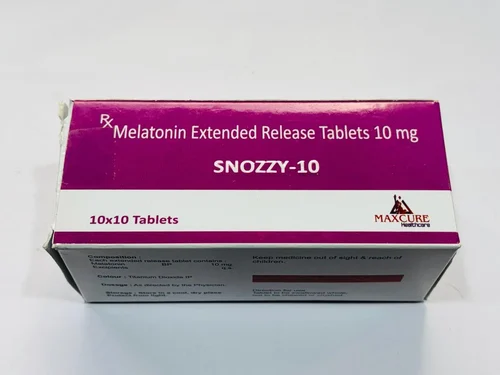
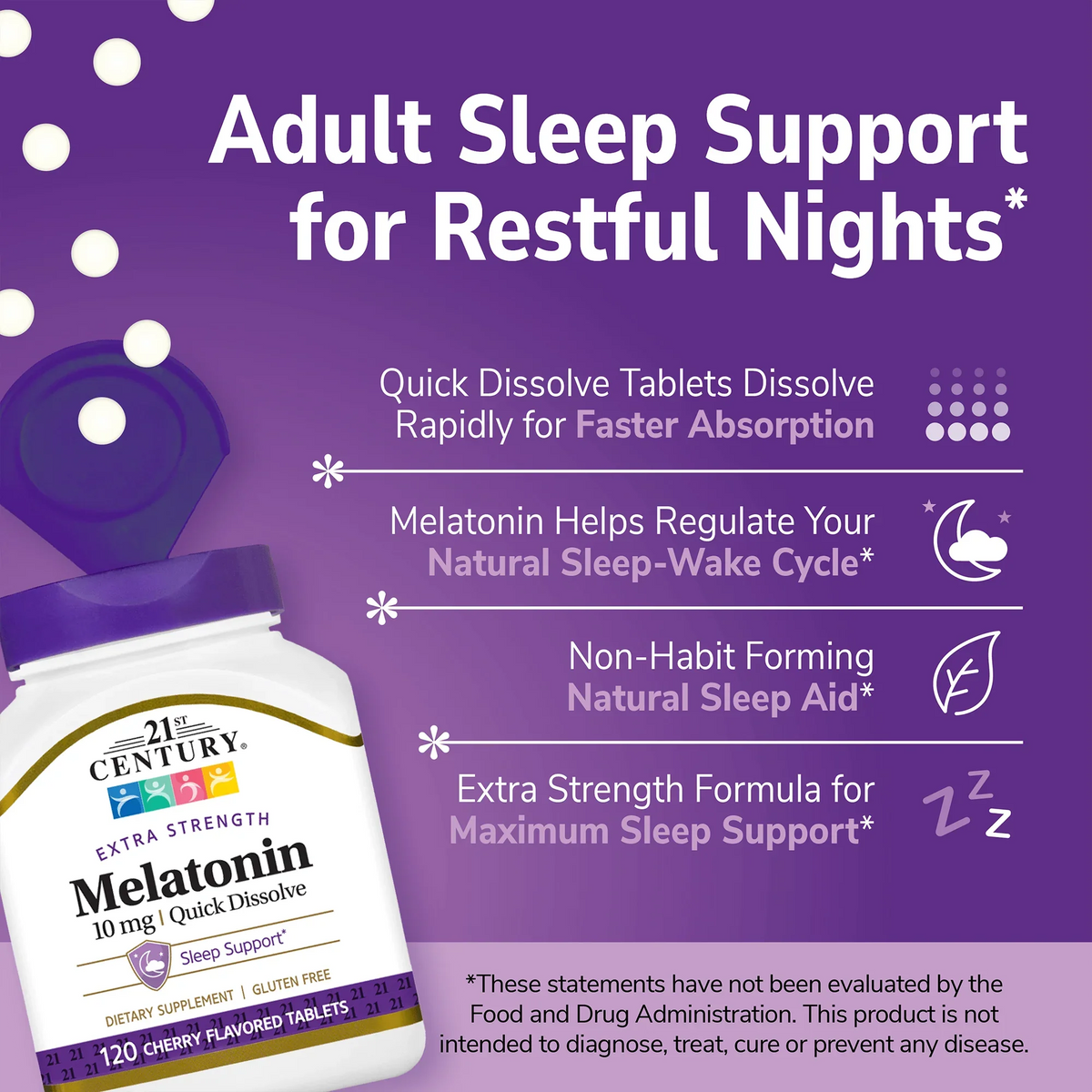
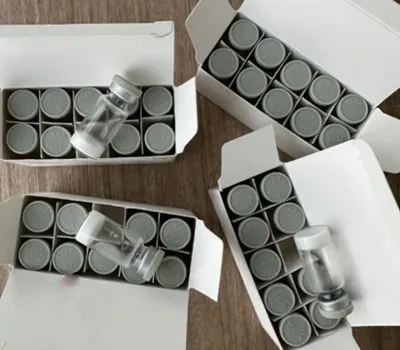
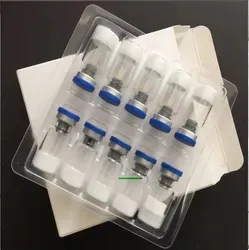
Melatonin 10 mg – Product Description (10 Vials)
High-Dose Melatonin for Sleep Support and Circadian Rhythm Regulation
Melatonin 10mg*10vials: Melatonin is a naturally occurring hormone produced by the pineal gland in the brain, recognized as a key element in regulating the body’s day/night metabolic rates and sleep-wake cycle . Secretion of melatonin is synchronized with our biological clock—production increases in darkness, producing the feeling of sleepiness, while exposure to light results in rapid breakdown and suppression of melatonin . This 10 mg formulation provides a high-strength dose for individuals seeking robust support for sleep initiation, maintenance, and circadian rhythm regulation.
Table of Contents
-
What is Melatonin?
-
Key Benefits
-
How Melatonin Works
-
Dosing Guidelines
-
Safety Profile
-
Frequently Asked Questions (FAQs)
-
References
What is Melatonin?
Melatonin is a hormone derived from serotonin, secreted primarily by the pineal gland in response to darkness . It plays a critical role in our sleep/wake cycle, and irregularities in melatonin production can cause sleep problems, lethargy, and mood disorders . Production usually decreases with age, substantially reducing the total amount of melatonin and often making day/night cycling less pronounced .
Melatonin is also an excellent antioxidant—one of the most proficient free radical scavengers with the unique ability to permeate any cell in any part of the body to remove free radicals . While many antioxidants work only in certain areas, melatonin’s broad cellular permeability makes it distinctive in supporting overall cellular health.
Key Benefits
Sleep Onset Support
Melatonin helps reduce the time it takes to fall asleep (sleep onset latency), particularly in individuals with delayed sleep phase syndrome . It is often used for insomnia, jet lag, or shift work-related sleep issues, typically taken about 30 minutes to three hours before bedtime .
Total Sleep Time Enhancement
Helps increase total sleep time in people suffering from sleep restriction or altered sleep schedules, including shift workers and travelers experiencing jet lag . By resetting the body’s sleep-wake cycle, melatonin supports restoration of natural sleep patterns.
Circadian Rhythm Regulation
Helps reset the body’s sleep-wake cycle and relieve daytime fatigue associated with jet lag . This makes it particularly useful for individuals traveling across multiple time zones.
Non-Habit Forming
Unlike many conventional sleeping pills, melatonin is not habit forming . It works to correct the sleep cycle rather than inducing artificial sedation.
How Melatonin Works
| Mechanism | What It Does | Why It Matters |
|---|---|---|
| Pineal Gland Secretion | Melatonin is only produced when the surrounding environment is dark; the pineal gland receives light-level information from the optic nerve and adjusts output accordingly | Synchronizes sleep with natural day/night cycles |
| Sleep Onset Induction | Blood melatonin levels rise to a point where sleep is induced, reach a peak a few hours after sleep onset, then gradually decrease | Supports natural sleep architecture |
| Free Radical Scavenging | Melatonin permeates any cell in any part of the body to remove free radicals | Provides antioxidant protection throughout the body |
| Circadian Rhythm Reset | Helps adjust the body’s biological clock in response to altered sleep schedules | Useful for shift work and jet lag recovery |
Dosing Guidelines
| Use Case | Typical Dose | Timing |
|---|---|---|
| Sleep onset support | 0.5–10 mg daily | Up to 3 hours before bed |
| Jet lag support | 5–10 mg | Close to target bedtime at destination |
| Shift work adjustment | 5–10 mg | Before daytime sleep period |
Directions — Take 1 vial/caplet daily at or before bedtime. For use beyond 4 weeks, consult a healthcare practitioner .
Storage — Store between 15°C–25°C away from children and protect from light .
Safety Profile
Melatonin is generally well-tolerated at research and clinical doses. In a pharmacokinetic study of high-dose intravenous melatonin (10 mg and 100 mg), no adverse effects were reported, and the compound did not induce sedation as evaluated by simple reaction times .
Key Safety Data
| Parameter | 10 mg IV Bolus | Clinical Significance |
|---|---|---|
| Cmax | 221,500.0 pg/mL | Rapid absorption |
| t½ | 42.3 minutes | Short half-life; effects are short-acting |
| Vd | 1.6 L/kg | Wide tissue distribution |
| CL | 0.0253 L/min·kg | Efficient clearance |
Clinical Research Applications
Clinical trials have investigated 10 mg melatonin in various settings:
-
Neonates (oral 10 mg single dose) — mortality reduction in moderate and severe cases
-
Small cohort study — serum malondialdehyde and nitrite/nitrate reduction
-
No sedation effects observed at 10 mg intravenous dose :Melatonin 10mg*10vials
Potential Side Effects
-
Mild drowsiness (expected therapeutic effect)
-
Headache (rare)
-
Dizziness (uncommon)
-
Gastrointestinal discomfort (occasional)

Frequently Asked Questions (FAQs)
1. What is Melatonin 10 mg used for?
It is primarily used for sleep support (reducing time to fall asleep, increasing total sleep time) and circadian rhythm regulation for jet lag and shift work . Higher-dose formulations like 10 mg are typically indicated for individuals who have not responded to lower doses.
2. Is Melatonin habit-forming?
No. Unlike many conventional sleeping pills, melatonin is not habit forming . It works by correcting the natural sleep cycle rather than inducing artificial sedation.
3. When should I take Melatonin?
Melatonin should be taken about 30 minutes to 3 hours before bedtime . Timing is crucial—taking it too early or too late can disrupt your sleep cycle .
4. How does Melatonin work?
Melatonin is produced by the pineal gland in response to darkness, creating the feeling of sleepiness . Exogenous melatonin supplementation helps reset the body’s sleep-wake cycle, particularly useful when natural rhythms are disrupted by travel, shift work, or age-related decline .
5. Is Melatonin 10 mg safe for long-term use?
For use beyond 4 weeks, consultation with a healthcare practitioner is recommended . Pharmacokinetic studies show melatonin has a short half-life (~42 minutes) and is efficiently cleared from the body .
6. What are the antioxidant benefits of Melatonin?
Melatonin is one of the most proficient free radical scavengers, with the unique ability to permeate any cell in any part of the body to remove free radicals . This distinguishes it from many antioxidants that work only in specific cellular areas.
7. Can Melatonin be used for shift work?
Yes. Melatonin helps increase total sleep time in people suffering from sleep restriction or altered sleep schedules, including shift work and jet lag .
8. What does “10 vials” mean?
Each vial contains 10 mg of melatonin in a formulated preparation. The “10 vials” packaging indicates a 10-count supply.
References
-
Jamieson Laboratories. Melatonin 10 mg Timed Release Dual Action Monograph. NPN 80030987
-
Andersen LPH, et al. Pharmacokinetics of high-dose intravenous melatonin in humans. Journal of Clinical Pharmacology. 2016;56(3):324-9
-
Tecnex Pharma Melatonex. Melatonin 10 mg Sleeping Tablets – Product Information
-
Melatonin Forte Relaxation & Sleep Tab 10 mg – Product Information
-
Table 3. Clinical Studies on Melatonin in Neonates. Molecules. 2023







Reviews
There are no reviews yet.