


Fast Delivery
Quick, reliable shipping to any location.

Free & easy returns
Return this item by mail or in store within 90 days for a full refund.
Kisspeptin-10: Research Peptide Profile
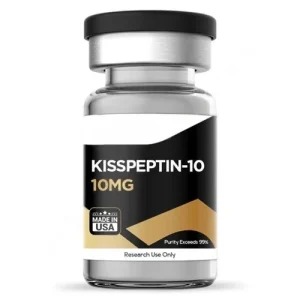
Kisspeptin-10 (KP-10) is a synthetic peptide corresponding to the 10-amino-acid fragment of the KISS1 gene product, a critical regulator of the hypothalamic-pituitary-gonadal (HPG) axis. This peptide is a potent activator of the G protein-coupled receptor GPR54 (KISS1R) and plays a fundamental role in the initiation of puberty, regulation of reproductive function, and emerging research areas including cancer and neuroprotection .
What is Kisspeptin-10?
Kisspeptin-10 is a peptide consisting of 10 amino acids (CAS Number: 374675-21-5) . It is the smallest of the biologically active kisspeptin fragments (KP-54, KP-14, KP-13, and KP-10), all of which share the same 10-amino-acid C-terminal amidated sequence and bind to the KISS1R receptor .
Key Identifiers:
-
Molecular Formula: C₆₃H₈₃N₁₇O₁₄
-
Molecular Weight: 1302.46 g/mol
-
Status: Research compound; not FDA-approved for human use
Drug Type:
-
Biotech (neuropeptide)
Mechanism of Action
Kisspeptin-10 exerts its biological effects by binding to the G-protein-coupled receptor KISS1R (GPR54). This binding activates intracellular signaling cascades that ultimately trigger the release of gonadotropin-releasing hormone (GnRH) from hypothalamic neurons, leading to the secretion of luteinizing hormone (LH) and follicle-stimulating hormone (FSH) from the pituitary gland. This role establishes kisspeptin as a “master regulator” of the reproductive axis and a key mediator of sex hormone feedback .
Non-Reproductive Effects
Research has identified KP-10 as a pleiotropic molecule with actions beyond reproduction, often mediated through alternative signaling pathways like cAMP/PKA and Nrf2 .
| Research Area | Model & Finding |
|---|---|
| Reproductive Function | Stimulates GnRH and LH release. Investigated in fertility disorders, hypogonadotropic hypogonadism, and polycystic ovary syndrome . |
| Metabolic Regulation | Centrally modulates food intake and energy expenditure in a sex-dependent manner. Central administration in male mice decreased food intake (~50%), while female mice showed increased locomotor activity (>65%) . |
| Cancer Research | Shows anti-tumor effects in triple-negative breast cancer, reducing cell viability, inducing apoptosis, and reversing epithelial-mesenchymal transition (EMT) . |
| Gestational Diabetes (GDM) | In a rat model, KP-10 improved insulin sensitivity, decreased fetal blood glucose, and restored cAMP/PKA signaling in placental trophoblast cells . |
| Neuroprotection | Preserved blood-brain barrier (BBB) integrity post-stroke by upregulating Claudin-10 and reducing oxidative stress via the Nrf2 pathway in a mouse model . |
| Cerebral Aneurysm | In a mouse model, KP-10 prevented aneurysm development by reducing MMP-9, VEGF-A, and macrophage infiltration, mediated through the GPR54 receptor . |
| Atherosclerosis | A potential concern exists as a nonclinical study suggested KP-10 may accelerate the development of aortic atherosclerotic lesions in mice . |
Clinical Trial Status
Kisspeptin-10 has been investigated in several small-scale clinical trials, predominantly for reproductive and metabolic conditions .
| Study Type & Indication | Status | Phase | Population |
|---|---|---|---|
| Reproductive Disorders & Fertility | Recruiting / Completed | Phase I/II | Patients with hypogonadotropic hypogonadism, hypothalamic amenorrhea, and hyperprolactinemia . |
| Metabolic Diseases | Completed / Withdrawn | Phase I | Healthy volunteers and patients with metabolic diseases to assess KP-10’s effect on insulin secretion . |
A key Phase 1 trial evaluated KP-10’s effect on glucose-stimulated insulin secretion with an oral glucose tolerance test . However, a 2014 Phase III trial in Pakistan (NCT03771326) investigating KP-10’s effect on insulin secretion in healthy and obese diabetic men was marked as “withdrawn” and showed no results .
Safety and Regulatory Status
FDA Status
Kisspeptin-10 is not FDA-approved for any indication. The FDA has evaluated KP-10 for inclusion on the 503A Bulks List (which would permit pharmacy compounding) and concluded that the criteria weigh against its inclusion.
FDA’s Rationale:
-
Insufficient Physiochemical Characterization: The peptide is not adequately characterized for compounding purposes .
-
Lack of Established Safety: No long-term clinical safety data exists. Chronic use may pose a risk of immunogenicity, a common concern for injectable peptides, particularly when administered via the subcutaneous route .
-
Atherosclerosis Concern: A nonclinical study indicated that KP-10 administration accelerated aortic atherosclerotic lesions and vascular inflammation in atherosclerosis-prone mice .
-
Questionable Efficacy: A lack of evidence supports KP-10 as an effective treatment for secondary hypogonadism. FDA-approved treatments are already available for this indication .
WADA and Sports Status
Kisspeptin-10 is not explicitly named on the World Anti-Doping Agency (WADA) Prohibited List. However, due to its potent effects on the HPG axis and stimulation of endogenous hormones, it may fall under the “S2. Peptide Hormones, Growth Factors, Related Substances and Mimetics” category, making it a prohibited substance in competitive sports.
Frequently Asked Questions
What is the primary mechanism of Kisspeptin-10?
Kisspeptin-10 binds to the GPR54 (KISS1R) receptor, triggering the release of gonadotropin-releasing hormone (GnRH), which then stimulates the secretion of luteinizing hormone (LH) and follicle-stimulating hormone (FSH). This action is central to its role as a master regulator of the reproductive system .
Is Kisspeptin-10 FDA-approved?
No, Kisspeptin-10 is not FDA-approved for human use. It is classified as a research compound and is not legally available for human consumption .
What does the research show about Kisspeptin-10?
Research demonstrates it is a potent stimulator of the reproductive axis. It also shows promising effects in preclinical models for metabolic regulation, cancer (breast cancer), neuroprotection (stroke), and gestational diabetes, but the data is primarily preclinical .
Is Kisspeptin-10 safe?
Long-term safety data is lacking. While short-term studies in humans reported no serious adverse events, the FDA has raised concerns about potential immunogenicity and a possible risk of accelerating atherosclerosis based on animal studies .

Is Kisspeptin-10 banned in sports?
While not explicitly named by WADA, it is likely prohibited as a peptide hormone due to its ability to stimulate the HPG axis and alter endogenous hormone levels .
What are the key clinical applications being researched?
Fertility and reproductive health are the primary areas of study. It is also being investigated for metabolic disorders like gestational diabetes and as a potential therapeutic target in oncology and neurovascular disease .
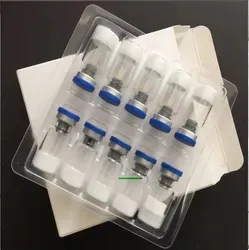
| KissPeptin-10 |
5mg*10vials ,10mg* |
|---|







Reviews
There are no reviews yet.