

Fast Delivery
Quick, reliable shipping to any location.

Free & easy returns
Return this item by mail or in store within 90 days for a full refund.
Ipamorelin: Research Profile of the Selective Growth Hormone Peptide
Ipamorelin is a synthetic pentapeptide that functions as a selective agonist of the growth hormone secretagogue receptor (GHS-R1a), the same receptor targeted by the endogenous hormone ghrelin . This profile provides essential information for researchers working with this compound.
What is Ipamorelin?
Ipamorelin is a synthetic peptide consisting of five amino acids linked in a chain, derived from growth hormone-releasing peptide 1 (GHRP-1) . It was developed by Novo Nordisk in the late 1990s as part of a medicinal chemistry program aimed at identifying growth hormone secretagogues with improved selectivity compared to earlier compounds .
Key Identifiers:
-
Sequence: Aib-His-D-2-Nal-D-Phe-Lys-NH₂
-
Molecular Formula: C₃₈H₄₉N₉O₅
-
Molecular Weight: 711.9 g/mol (free base)
-
CAS Number: 170851-70-4 (free base)
-
Status: Research compound; not FDA-approved for any indication
The compound is available in both free base and acetate salt forms, which are considered distinct chemical entities with different chemical structures and physical properties .
Mechanism of Action
Ipamorelin functions as a ghrelin mimetic, binding to and activating the growth hormone secretagogue receptor type 1a (GHS-R1a) in the pituitary and hypothalamus . This binding triggers the release of growth hormone from somatotroph cells in a pulsatile pattern that preserves the hypothalamic feedback mechanisms governing GH secretion .
Receptor Binding:
-
Binds to GHS-R1a with a Ki of 63.4 nM
-
Induces inositol-1,4,5-triphosphate (IP₃) accumulation in cells expressing GHS-R1a (EC₅₀ = 46.9 nM)
-
Stimulates GH release from primary rat pituitary cells (EC₅₀ = 1.3 nM)
Selectivity Profile:
The defining pharmacological characteristic of ipamorelin is its selectivity. Unlike earlier growth hormone secretagogues such as GHRP-2 and GHRP-6, which elevate ACTH and cortisol levels, ipamorelin does not significantly affect these hormones .
| Hormone | Ipamorelin Effect |
|---|---|
| Growth Hormone (GH) | Increases (potent and selective) |
| ACTH | No significant effect |
| Cortisol | No significant effect |
| Prolactin | No significant effect |
| FSH, LH, TSH | No significant effect |
This selectivity was observed even at doses more than 200-fold higher than the ED₅₀ for GH release . The lack of cortisol and ACTH elevation is the key distinction from GHRP-2, GHRP-6, and hexarelin, all of which produce adrenal-axis activation .
Receptor Distribution:
GHS-R1a receptors are present not only in the brain but also in the gastrointestinal tract, heart, lung, liver, kidney, pancreas, adipose tissue, and immune cells . This widespread distribution underlies the peptide’s research applications beyond the endocrine system.

Research Applications
Growth Hormone Stimulation Studies
Ipamorelin is widely used as a research tool for studying GH secretion. In animal models, it has demonstrated:
-
Potency in Rats (pentobarbital anaesthetized): ED₅₀ = 80 ± 42 nmol/kg; Emax = 1545 ± 250 ng GH/ml
-
Potency in Conscious Swine: ED₅₀ = 2.3 ± 0.03 nmol/kg; Emax = 65 ± 0.2 ng GH/ml
-
Comparative Efficacy: Similar potency to GHRP-6, though GHRP-2 displays higher potency (ED₅₀ = 0.6 nmol/kg) but lower efficacy (56 ± 6 ng GH/ml)
Bone Growth Research
Preclinical studies have investigated ipamorelin’s effects on bone:
-
Hypophysectomized rats showed statistically significant longitudinal bone growth following ipamorelin administration
-
Adult female rats receiving ipamorelin demonstrated increased bone mineral content
-
Studies demonstrate the GH-IGF-1 axis remains responsive to GHS stimulation even during glucocorticoid exposure
Gastrointestinal Motility Research
Ipamorelin has been investigated for its effects on gastrointestinal motility, primarily through its action on ghrelin receptors present in the GI tract :
-
In a rodent model of postoperative ileus, a single dose of ipamorelin (1 mg/kg) decreased time to first bowel movement
-
Repetitive dosing (0.1 or 1 mg/kg, four times daily for 2 days) significantly increased cumulative fecal pellet output, food intake, and body weight gain
Chemotherapy-Induced Weight Loss Research
A 2024 study investigated ipamorelin’s potential in mitigating chemotherapy-induced weight loss:
-
In a ferret model of cisplatin-induced emesis, ipamorelin (1-3 mg/kg i.p.) inhibited associated weight loss during the delayed phase (48-72 hours) by approximately 24%
-
Neither ipamorelin nor anamorelin had any effect on acute or delayed emesis when administered peripherally
Safety Profile and Reported Effects
Observed Effects in Research
-
Appetite Stimulation: Ipamorelin has been associated with the ability to stimulate food intake and body weight gain
-
Gastrointestinal Motility: It can increase gastrointestinal motility
-
Insulin Sensitivity Concerns: Long-term use can result in more serious health conditions such as insulin sensitivity or diabetes
-
General Side Effects: Reported effects include headaches, nausea, rash, and lower blood pressure
Clinical Research Status
The only completed human randomized controlled trial of ipamorelin was a Phase 2 study investigating its use for postoperative ileus following bowel resection :
-
Population: 117 patients
-
Regimen: IV ipamorelin 0.03 mg/kg twice daily vs. placebo for up to 7 days
-
Result: Numerical but non-significant improvement (25.3 vs. 32.6 hours, p = 0.15)
-
Outcome: Ipamorelin did not meet its efficacy endpoints, and clinical development in this indication was discontinued
There are no completed human trials examining ipamorelin’s effects on body composition, lean mass, bone density, recovery, or IGF-1 for GH-related indications .
Regulatory Status and Legal Considerations
FDA and Compounding Status
As of September 2023, the FDA classified ipamorelin as a Category 2 bulk drug substance under Section 503A of the FD&C Act . This means:
-
Not legally compoundable by licensed pharmacies under Section 503A
-
Not FDA-approved for any human therapeutic indication
-
No applicable USP or NF drug substance monograph exists
FDA Evaluation Rationale: In its October 2024 briefing document, the FDA concluded the evaluation criteria weigh against placing ipamorelin (free base) and ipamorelin acetate on the 503A Bulks List, citing significant safety concerns related to peptide composition, immunogenic potential, aggregation, and challenges in characterization .
WADA Prohibited Status
Ipamorelin is included in the WADA Prohibited List (S2.2.4) as a peptide hormone, growth factor, and related substance. It is prohibited both in and out of competition . The substance meets at least two of the three WADA criteria:
-
Has the potential to enhance sports performance
-
Poses an actual or potential health risk to the athlete
-
Violates the spirit of sport
TGA Status (Australia)
-
Not listed in the Therapeutic Goods (Permissible Ingredients) Determination
-
Not an excipient or active ingredient in any medicines on the Australian Register of Therapeutic Goods
Frequently Asked Questions
What is Ipamorelin?
Ipamorelin is a synthetic pentapeptide that selectively activates the growth hormone secretagogue receptor (GHS-R1a) to stimulate pulsatile growth hormone release without elevating cortisol, ACTH, or prolactin .
How does Ipamorelin work?
It mimics ghrelin and binds to GHS-R1a receptors in the pituitary and hypothalamus, triggering the release of growth hormone. Unlike earlier GHRPs, it does not affect ACTH, cortisol, or prolactin levels .
Is Ipamorelin FDA-approved?
No. Ipamorelin is not FDA-approved for any indication. As of September 2023, it is classified as a Category 2 bulk drug substance, prohibiting its use in compounded medications for human administration .
What does research show about Ipamorelin?
Preclinical research demonstrates GH-releasing properties, increased bone growth in rats, and improved gastrointestinal motility in rodent models of postoperative ileus. However, the only completed human RCT failed to meet its efficacy endpoints for postoperative ileus .
How does Ipamorelin differ from GHRP-2 and GHRP-6?
The key difference is selectivity. Ipamorelin stimulates GH without elevating ACTH, cortisol, or prolactin. GHRP-2 and GHRP-6 both produce significant increases in ACTH and cortisol .
Is Ipamorelin banned in sports?
Yes. Ipamorelin is prohibited by WADA under Section S2.2.4 both in and out of competition .
Can I buy Ipamorelin?
Ipamorelin is available from research suppliers for laboratory use only. It is not legally marketed for human consumption in the United States .
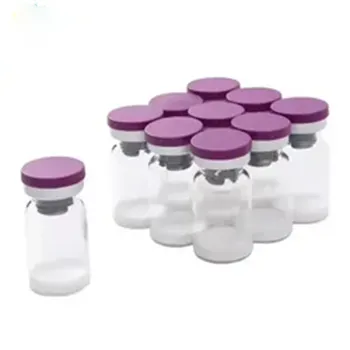
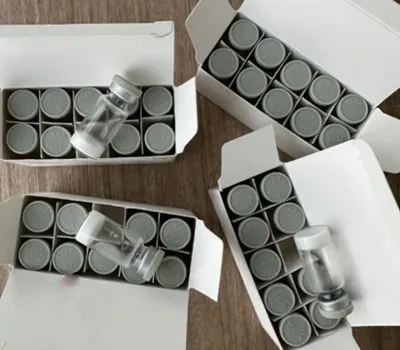
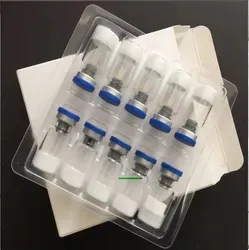
| Ipamorelin |
5mg*10vials ,10mg*10vials |
|---|





Reviews
There are no reviews yet.