Oxytocin Acetate
$30.00 – $50.00Price range: $30.00 through $50.00
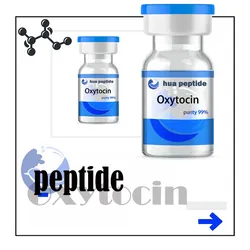
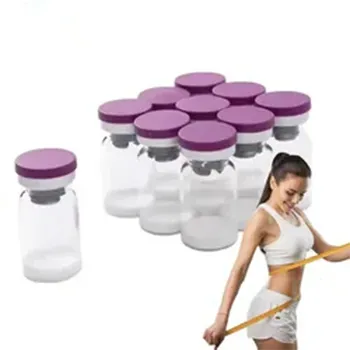
Looking for oxytocin peptide for sale? Apeptide offers 99% pure research-grade oxytocin acetate.
You’re now subscribed to price tracking for this product. We’ll notify you if the price drops.
Fast Delivery
Quick, reliable shipping to any location.
Free & easy returns
Return this item by mail or in store within 90 days for a full refund.
Oxytocin Acetate – Product Description
The Foundational Neuropeptide for Reproductive, Social, and Cellular Research
Oxytocin acetate is a synthetic form of the naturally occurring mammalian neuropeptide, a cyclic nonapeptide composed of nine amino acids . Often described as a “pleiotropic, hypothalamic peptide,” it is a key hormone and neuromodulator with a wide array of biological activities . Its primary physiological roles involve facilitating parturition (childbirth), lactation, and maternal bonding, but research has also revealed its profound impact on social behaviors, stress response, and cellular signaling .
Table of Contents
-
What is Oxytocin Acetate?
-
Mechanism of Action
-
Key Research Findings
-
Product Specifications
-
Dosing and Administration
-
Safety Profile
-
Frequently Asked Questions (FAQs)
-
References
What is Oxytocin Acetate?
Oxytocin is a versatile peptide hormone produced primarily in the hypothalamus and released from the posterior pituitary gland. It is involved in a wide range of functions. The acetate salt form is commonly used in research for its enhanced stability and solubility . The importance of this peptide was underscored when Vincent du Vigneaud was awarded a Nobel Prize for its sequencing and synthesis .
| Property | Detail |
|---|---|
| Synonyms | α-Hypophamine; Endopituitrina; 缩宫素 |
| CAS Number (Base) | 50-56-6 |
| CAS Number (Acetate) | 6233-83-6 |
| Molecular Formula (Base) | C₄₃H₆₆N₁₂O₁₂S₂ |
| Molecular Weight (Base) | ~1007.2 Da |
| Molecular Weight (Acetate) | ~1067.24 Da |
| Sequence | C[Cys-Tyr-Ile-Gln-Asn-Cys]-Pro-Leu-Gly-NH₂ |
| Purity (Research Grade) | ≥98% (HPLC) |
| Storage | -20°C, protected from moisture and light |
Mechanism of Action
Oxytocin exerts its effects by binding to the oxytocin receptor (OXTR), a typical class I G protein-coupled receptor . Its primary mechanisms include:
| Mechanism | What It Does | Why It Matters |
|---|---|---|
| Uterine Contraction | Increases intracellular calcium (Ca²⁺) in myometrial cells, promoting contractions for childbirth . | The basis for its clinical use in inducing and augmenting labor. |
| Milk Ejection | Stimulates myoepithelial cells in the mammary glands, leading to milk letdown . | Essential for lactation. |
| Social Behavior Modulation | Acts on the central nervous system (CNS) to modulate prosocial behaviors, bonding, and trust . | A key focus in neurobiological and psychological research. |
| Positive Allosteric Modulation | Enhances μ-opioid receptor (MOR) signaling, indirectly contributing to its analgesic effects . | New research suggests a novel pathway for pain modulation. |
| Stress-Coping Molecule | Possesses anti-inflammatory, antioxidant, and protective effects, especially in adversity . | Relevant for research into cellular resilience and stress responses. |
Key Research Findings
-
Reproductive Health: Oxytocin is a critical hormone for parturition and lactation, and its biological activity is strongly steroid-dependent .
-
Cellular Signaling: In research models, oxytocin has been shown to enhance opioid receptor signaling. For instance, in cells expressing the μ-opioid receptor, oxytocin alone showed no effect, but at a concentration of 10⁻⁶ M, it markedly enhanced signaling stimulated by morphine and other opioids .
-
Neurobiology: Intracerebroventricular administration of oxytocin (0.2 μg) has been shown to robustly increase the firing rate of neurons in the nucleus accumbens shell of rats, a region central to reward and social behavior .
-
Biomarker Research: The interaction between the oxytocin system and other pathways, such as opioid signaling, is an emerging area of research, with implications for understanding social behavior and addiction .
Product Specifications
| Specification | Detail |
|---|---|
| Product Name | Oxytocin Acetate |
| Grade | Research Use Only (RUO) |
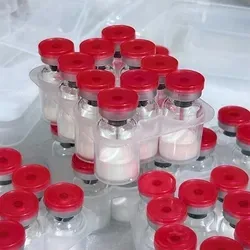
| Form | Lyophilized powder |
| Purity | ≥98% |
| Solubility | Soluble in water (≥10 mg/mL) and DMSO . |
Dosing and Administration
Dosing in research is highly protocol-dependent. The following data provides a general framework:
| Aspect | Detail |
|---|---|
| Route | Subcutaneous (SC), Intravenous (IV), or Intracerebroventricular (ICV) in animal models . |
| In Vitro | Concentrations of 10⁻¹⁰ to 10⁻⁵ M have been used in cell-based assays . |
| Animal Model (Rats) | An ICV dose of 0.2 µg was shown to affect neuronal firing rates . |
Reconstitution and Storage
-
Reconstitution: Dissolve in sterile water to a concentration of at least 10 mg/mL . For additional solubility guidance, consult the product data sheet .
-
Storage: Lyophilized powder should be stored at -20°C. After reconstitution, the solution should be aliquoted and stored frozen at -20°C or -80°C to prevent degradation from repeated freeze-thaw cycles .
Safety Profile
Oxytocin acetate is a potent research chemical and should be handled with appropriate care.
Known Effects
-
Reproductive Toxicity: Oxytocin is a known reproductive toxin. An SDS report classifies it as potentially damaging to the unborn child (Repr. 1A, H360) . In a rat study, the NOAEL for developmental toxicity was 1 mg/kg body weight (SC) .
-
Acute Toxicity: It is classified as an acute toxicant (Category 3 and 4) via ingestion and inhalation .
-
Cardiovascular Effects: In humans, side effects can include increased heart rate, tachycardia, hypotension, and flushing .
-
Gastrointestinal Effects: Nausea and vomiting have been reported .
-
Sensitization: It is not classified as a skin or respiratory sensitizer based on available data .
Important Safety Considerations
-
Not FDA-Approved: This product is a research compound and is not FDA-approved for human therapeutic use .
-
Reproductive Hazard: Due to its potent effects, it is a significant reproductive hazard and must be handled with extreme caution.
-
Laboratory Safety: Standard laboratory safety practices should be followed, including wearing gloves and eye protection .
Frequently Asked Questions (FAQs)
1. What is oxytocin acetate used for in research?
It is used to study its effects on uterine contraction, lactation, social behavior, cellular signaling pathways (like opioid receptor modulation), stress responses, and its anti-inflammatory properties .
2. What is the mechanism of action?
Oxytocin binds to the oxytocin receptor (OXTR), a G protein-coupled receptor, to initiate its effects. It can increase intracellular calcium in cells, leading to muscle contraction, and also acts on the brain to influence behavior .
3. How does oxytocin relate to pain relief?
Recent research has shown that oxytocin can act as a positive allosteric modulator of the μ-opioid receptor (MOR). While it doesn’t bind to MOR itself, it enhances the effects of opioids like morphine on their receptor, which may contribute to its analgesic effects .
4. Is oxytocin acetate a supplement?
No. It is a potent research chemical. It is not a dietary supplement and should never be used for self-administration. It is intended for research purposes only .
5. What are the safety risks?
Oxytocin is a major reproductive toxin and is classified as dangerous for the unborn child . It also has acute toxic effects. It should only be handled by trained personnel in a controlled laboratory environment.
6. How should oxytocin acetate be stored?
Lyophilized powder should be stored at -20°C in a sealed container, away from moisture and light. For reconstituted solutions, it should be aliquoted and stored at -20°C to avoid repeated freeze-thaw cycles .
References
-
Beyotime Biotechnology. Oxytocin Acetate (醋酸催产素) Product Information .
-
NCATS Inxight Drugs. Oxytocin Acetate – Drug Summary .
-
Intervet. INTERTOCINE-S 0.018mg/ml Product Information (Veterinary) .
-
Merck. Safety Data Sheet – Oxytocin Formulation .
-
Ambeed. Oxytocin acetate Product Specification .
-
Peptide-china. Oxytocin Acetate Product Information .
-
APExBIO. Oxytocin acetate Product Data Sheet .
-
chemBlink. Oxytocin acetate (salt) Hazard Classification .
-
PeptideDB. Oxytocin acetate Database Entry .
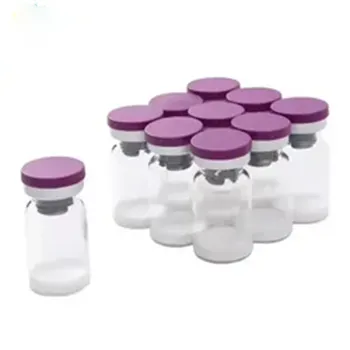
| Oxytocin Acetate |
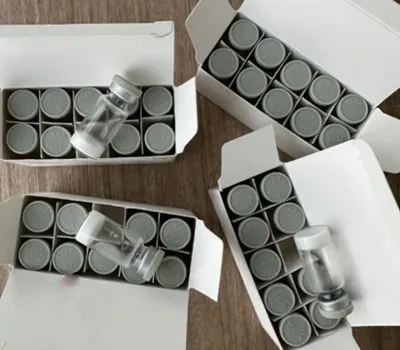
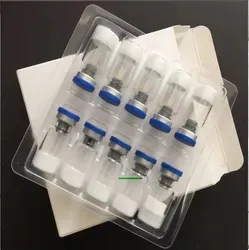
2mg*10vials ,5mg*10vials |
|---|

Reviews
There are no reviews yet.