

Fast Delivery
Quick, reliable shipping to any location.

Free & easy returns
Return this item by mail or in store within 90 days for a full refund.
Sermorelin Acetate – Product Description
The GHRH Analog for Endogenous Growth Hormone Research
Sermorelin acetate is the acetate salt of a synthetic 29-amino acid peptide (GRF 1-29 NH₂) that corresponds to the biologically active amino-terminal segment of the naturally occurring human growth hormone-releasing hormone (GHRH), which consists of 44 amino acid residues . As the shortest synthetic peptide retaining full biological activity of GHRH, sermorelin functions as a growth hormone-releasing agonist by binding to GHRH receptors on pituitary somatotrophs to stimulate endogenous growth hormone (GH) secretion .
Table of Contents
-
What is Sermorelin Acetate?
-
Mechanism of Action
-
Key Research Findings
-
Product Specifications
-
Dosing and Administration
-
Safety Profile
-
Frequently Asked Questions (FAQs)
-
References
What is Sermorelin Acetate?
Sermorelin is a synthetic structural analog of endogenous GHRH, comprising the first 29 amino acids of the native 44-amino-acid hormone . This truncated peptide retains the full biological activity of the complete hormone, making it a valuable tool for research into the growth hormone/insulin-like growth factor-1 (GH/IGF-1) axis .
| Property | Detail |
|---|---|
| Sequence | YADAIFTNSYRKVLGQLSARKLLQDIMSRQ |
| Molecular Formula | C₁₄₉H₂₄₆N₄₄O₄₂S |
| Molecular Weight | 3357.88 Da |
| CAS Number | 516482-86-3 |
| Half-Life | 11–12 minutes |
| Isoelectric Point | 9.99 |
| Purity (Research Grade) | ≥98% (HPLC) |
| Form | Lyophilized powder |
| Solubility | Water: 1 mg/mL |
| Storage | -20°C |
Mechanism of Action
Sermorelin functions through targeted agonism of the GHRH receptor:
| Mechanism | What It Does | Why It Matters |
|---|---|---|
| GHRH Receptor Binding | Binds specifically to GHRH receptors on pituitary somatotroph cells, mimicking native GRF | Stimulates endogenous GH secretion in a physiologic, pulsatile manner |
| GH Secretion Stimulation | Increases plasma GH concentration by stimulating the pituitary gland to release GH | Elevates downstream IGF-1 production, mediating many metabolic benefits |
| Endogenous Regulation | Activity is regulated by negative feedback mechanisms and somatostatin | Reduces risk of supraphysiologic GH levels compared to exogenous GH administration |
Unlike direct recombinant human GH (rhGH) therapy, sermorelin supports the body’s natural hormone regulation system rather than bypassing it. This pulsatile, feedback-regulated stimulation more closely mimics healthy, endogenous GH production .
Key Research Findings
Diagnostic Applications
Sermorelin was historically used in combination with arginine as a diagnostic test for adult growth hormone deficiency (GHD), considered a more reliable alternative to the insulin tolerance test (ITT) with fewer safety concerns . When administered with arginine, the test demonstrated utility in distinguishing healthy individuals from those with pituitary GHD .
Clinical Indications
Sermorelin was FDA-approved as Geref® for diagnostic evaluation of pituitary function and for the treatment of growth failure in children with growth hormone deficiency . Following discontinuation of Geref® by EMD Serono in 2008 (for reasons unrelated to safety or efficacy), sermorelin has remained available through compounding pharmacies for investigational and off-label research applications .
Physiologic GH Stimulation
Animal research has demonstrated sermorelin’s ability to stimulate GH release across species. In rats, intravenous administration at 1 μg/kg increased serum GH levels by approximately 17% compared with saline control after 15 minutes. GH release was also observed in pigs at a dose of 250 ng/kg .
Off-Label Research Applications
Practitioners have investigated sermorelin for various applications beyond its approved indications, including:
-
Management of age-related changes in body composition (reduced lean mass, increased adiposity)
-
Patients with hypogonadal symptoms and low or borderline IGF-1 levels
-
Weight loss support and improvement of sperm counts in select patient populations

Product Specifications
| Specification | Detail |
|---|---|
| Product Name | Sermorelin Acetate |
| Synonyms | Growth Hormone-releasing Factor (1-29) amide, hGH-RH(1-29)-NH₂, Somatotropin Releasing-Hormone (1-29) amide |
| UNII | 00IBG87IQW |
| Grade | Research Use Only (RUO) |
| Purity | ≥98% (HPLC) |
| Form | Lyophilized powder |
| Appearance | Sterile, non-pyrogenic, lyophilized powder |
| Water Solubility | 1 mg/mL |
| Storage | -20°C, protected from moisture and light |
Dosing and Administration
Research Protocols
| Aspect | Detail |
|---|---|
| Route | Subcutaneous injection |
| Typical Research Dose | 15–30 units (0.15–0.3 mL) or 500–1000 mcg per administration |
| Frequency | Once nightly on an empty stomach, 5 out of 7 days per week |
| Cycling Protocol | 12-week cycles followed by a 30-day holiday to mitigate decline in IGF-1 responsiveness |
Clinical Diagnostic Dosing
For diagnostic testing, administration protocols typically involve intravenous or subcutaneous injection at defined doses to assess GH response .
Reconstitution and Storage
-
Reconstitution: Dissolve lyophilized powder in sterile water for injection according to formulation instructions
-
Storage: Lyophilized powder should be stored at -20°C, protected from moisture and light
-
Stability: Reconstituted product should be used promptly
Safety Profile
Sermorelin is generally well-tolerated at research doses, with adverse effects typically mild and transient.
Common Side Effects
| Category | Specific Effects |
|---|---|
| Injection Site | Pain, swelling, redness, itching |
| Gastrointestinal | Nausea, vomiting |
| Neurological | Headache, dizziness |
| Other | Facial flushing, paleness, strange taste in mouth |
Rare Adverse Events
-
Dysphagia
-
Hyperactivity
-
Somnolence
-
Urticaria (hives)
-
Potential antibody development
Precautions and Contraindications
-
Cancer History: Avoid in patients with current or past diagnosis of cancer, particularly hormone-related tumors. Serum levels of IGF-1, a marker of GH activity, are associated with some malignancies
-
Pregnancy and Breastfeeding: Insufficient safety data; avoid use
-
Hypersensitivity: Known sensitivity to sermorelin or any excipients
-
Untreated Thyroid Disease: May interfere with optimal response; thyroid function should be evaluated and corrected prior to use
Important Considerations
-
Not FDA-Approved: Sermorelin is not currently available as an FDA-approved product. It is accessible through compounding pharmacies for research and off-label applications
-
Regulatory Context: The FDA-approved brand Geref® was discontinued in 2008 for reasons unrelated to safety or efficacy
-
Diagnostic Alternatives: Macimorelin (Macrilen®) is now approved in the US for diagnosing adult GHD
Frequently Asked Questions (FAQs)
1. What is sermorelin used for in research?
Sermorelin is used to study the GH/IGF-1 axis, evaluate pituitary function, and investigate applications related to growth hormone deficiency, age-related body composition changes, and metabolic health .
2. How does sermorelin differ from exogenous growth hormone?
Sermorelin stimulates endogenous GH release in natural pulses that mimic normal physiologic processes. Exogenous GH therapy directly bypasses the body’s regulatory system . Sermorelin’s activity is regulated by negative feedback, reducing safety concerns associated with GH overdosing .
3. What is the mechanism of action?
Sermorelin binds to GHRH receptors on pituitary somatotroph cells, mimicking native GHRH to stimulate the release of growth hormone from the pituitary gland .
4. What are the most common side effects?
The most common side effects are local injection site reactions (pain, swelling, redness) occurring in about one in six patients . Other effects include facial flushing, headache, nausea, and dizziness .
5. Why is sermorelin taken at night on an empty stomach?
Taking sermorelin at night aligns with the body’s natural GH release peak during sleep. An empty stomach is recommended because somatostatin levels fluctuate after eating, which may interfere with sermorelin’s action .
6. What is the rationale for cycling sermorelin?
Cycling 5 days on, 2 days off helps prevent receptor desensitization. Studies suggest that after approximately 16 weeks of use, the body may become less responsive to IGF-1. A 2–4 week break every 3 months is therefore recommended to maintain efficacy .
7. Is sermorelin contraindicated in cancer?
There is no clear evidence linking sermorelin to cancer development . However, because sermorelin has not been specifically studied in patients with active cancer, it is generally recommended to avoid use in individuals with a current cancer diagnosis or known tumors .
8. Is sermorelin FDA-approved?
Sermorelin was previously FDA-approved as Geref® but was discontinued by the manufacturer in 2008. It is not currently available as an FDA-approved product and is accessible through compounding pharmacies .
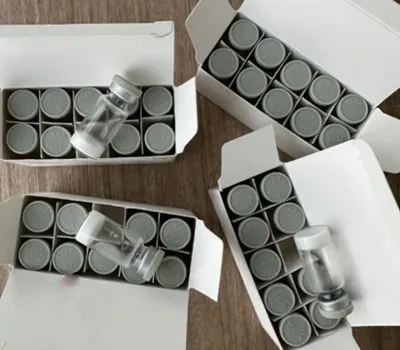
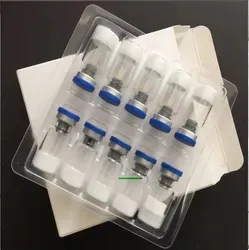
| Sermorelin Acetate |
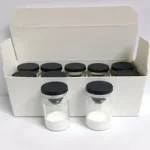
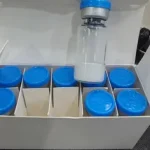
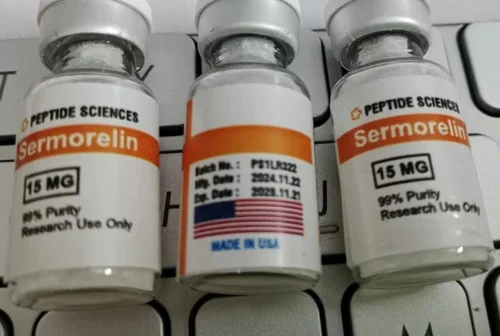
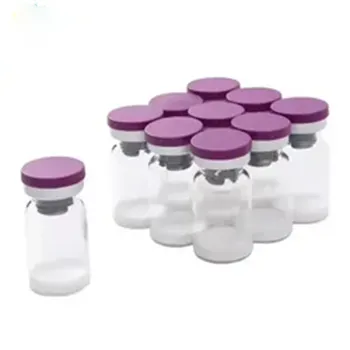
5mg*10vials ,10mg*10vials |
|---|





Reviews
There are no reviews yet.