

Fast Delivery
Quick, reliable shipping to any location.

Free & easy returns
Return this item by mail or in store within 90 days for a full refund.
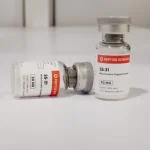
SNAP-8 – Product Description
The Advanced Octapeptide for SNARE Complex Research and Topical Formulation Studies
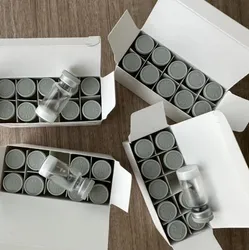
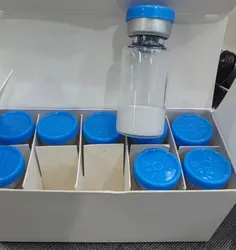
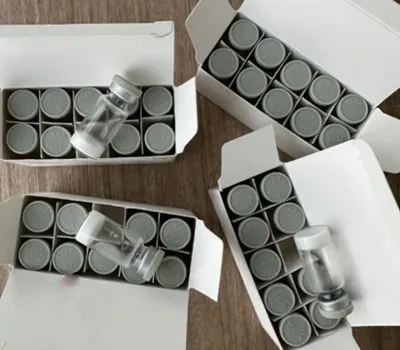
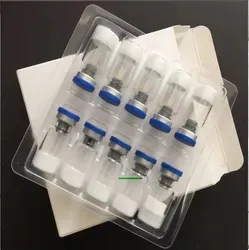
SNAP-8 10 mg: SNAP-8 (Acetyl Octapeptide-3) is a synthetic octapeptide designed as an advanced analog of the N-terminal domain of the SNAP-25 protein, a core component of the SNARE complex essential for neurotransmitter release . Building upon the legacy of its predecessor, Argireline (Acetyl Hexapeptide-3), SNAP-8 incorporates a two-amino-acid C-terminal extension that enhances its structural mimicry and functional activity, making it a subject of interest in cellular communication, vesicle fusion dynamics, and topical formulation research .
Table of Contents
-
What is SNAP-8?
-
Mechanism of Action
-
Key Research Findings
-
Product Specifications
-
Dosing and Administration
-
Safety Profile
-
Frequently Asked Questions (FAQs)
-
References
What is SNAP-8?
SNAP-8, also known as Acetyl Octapeptide-3, is a synthetic peptide with the amino acid sequence Ac-Glu-Glu-Met-Gln-Arg-Arg-Ala-Asp-NH₂ . It is an engineered analogue of the N-terminal domain of SNAP-25 (Synaptosomal-Associated Protein of 25 kDa), a protein integral to the SNARE complex that mediates synaptic vesicle fusion and neurotransmitter release .
| Property | Detail |
|---|---|
| Synonyms | Acetyl Octapeptide-3, Acetyl Glutamyl Octapeptide-3 |
| CAS Number | 868844-74-0 |
| Molecular Formula | C₄₁H₇₀N₁₆O₁₆S (approx.) |
| Molecular Weight | ~1073–1075 Da |
| Sequence | Ac-Glu-Glu-Met-Gln-Arg-Arg-Ala-Asp-NH₂ |
| Purity (Research Grade) | ≥98% (HPLC) |
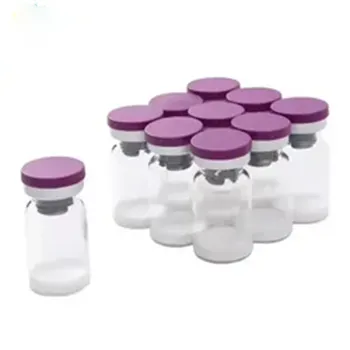
| Form | Lyophilized powder |
| Solubility | Soluble in aqueous solutions |
| Storage | -20°C, protected from moisture and light |
Mechanism of Action
SNAP-8 functions primarily through competitive inhibition of the SNARE complex assembly .
| Mechanism | What It Does | Why It Matters |
|---|---|---|
| SNARE Complex Inhibition | Competes with native SNAP-25 for binding sites on syntaxin within the SNARE complex | Modulates neurotransmitter release without causing permanent paralysis |
| Synaptic Vesicle Fusion Modulation | Disrupts the formation of the ternary SNARE complex (VAMP, syntaxin, SNAP-25) essential for vesicle docking and fusion | Attenuates acetylcholine exocytosis at the neuromuscular junction |
| Calcium-Mediated Pathway Interaction | Theorized to interact with calcium-related pathways that influence vesicle fusion processes | Provides a simplified model for studying calcium-dependent conformational shifts |
The peptide’s N-terminal acetylation and C-terminal amidation enhance its stability and structural mimicry of the native protein . Binding affinity studies report a dissociation constant (Kd) of approximately 0.8 μM for SNAP-8 binding to syntaxin . Functional assays demonstrate that SNAP-8 at 1.5 mM inhibits 43% of glutamate release in neuronal model systems, a validated proxy for acetylcholine release .
Key Research Findings
Head-to-Head Efficacy vs. Argireline
The primary research differentiator for SNAP-8 is its demonstrated performance advantage over Argireline:
| Metric | SNAP-8 | Argireline | Relative Improvement |
|---|---|---|---|
| Wrinkle Depth Reduction (28 days) | 34.98% | 27.05% | ~29% greater efficacy |
| Relative Bioactivity | Baseline + 30% | Baseline | ~30% greater activity |
In a manufacturer-conducted comparative clinical study, a 10% SNAP-8 solution reduced wrinkle depth by 34.98% over 28 days, compared to 27.05% for Argireline under identical conditions . This absolute difference of 7.93 percentage points represents a relative improvement of approximately 29% .
SNARE Complex Inhibition
Research demonstrates that SNAP-8 effectively competes with native SNAP-25 for a position in the SNARE complex . In vitro assays measuring SNARE complex formation showed that SNAP-8 impedes complex assembly in a dose-dependent manner, destabilizing the vesicle fusion machinery .
Glutamate Release Modulation
Functional assays in neuronal cell cultures confirmed that SNAP-8 inhibits glutamate release in a dose-dependent fashion, with 43% inhibition observed at a 1.5 mM concentration . This mechanism is central to its role in modulating synaptic vesicle exocytosis.
Structural Biology and Computational Modeling
SNAP-8’s modest size makes it a valuable tool for computational biology. It is amenable to molecular dynamics simulations exploring conformational flexibility, residue-specific interactions, and theoretical binding affinities . These models help refine understanding of which structural features of the SNAP-25 N-terminal domain are most responsible for SNARE component interactions .
Product Specifications
| Specification | Detail |
|---|---|
| Product Name | SNAP-8 (Acetyl Octapeptide-3) |
| Size | 10 mg |
| Grade | Research Use Only (RUO) |
| Purity | ≥98% (HPLC) |
| Form | Lyophilized powder |
| Molecular Weight | ~1073–1075 Da |
| Sequence | Ac-Glu-Glu-Met-Gln-Arg-Arg-Ala-Asp-NH₂ |
Dosing and Administration
SNAP-8 is a research peptide with applications in both in vitro assays and topical formulation studies.
| Application | Concentration | Notes |
|---|---|---|
| Topical Formulations (Research) | 3–10% | Twice-daily application in clinical studies |
| In Vitro Assays | 100 µM | Used in catecholamine secretion studies |
| Neuronal Cell Assays | 1.5 mM | Demonstrated 43% glutamate release inhibition |
Reconstitution and Storage
-
Reconstitution: Dissolve lyophilized powder in sterile water or appropriate aqueous buffer. Solubility exceeds 2 mg/mL in water.
-
Storage: Powder should be stored at -20°C, protected from moisture and light.
-
Stability: SNAP-8 is reported to be more stable than Argireline in formulation conditions .
Safety Profile
SNAP-8 is generally considered well-tolerated in research and topical formulation studies. Comparative analyses note that SNAP-8 has lower potency and toxicity than botulinum toxin, with no serious adverse effects reported in clinical studies .
Known Considerations
-
Cutaneous Absorption: As with other peptides, SNAP-8’s molecular weight (~1075 Da) and hydrophilic nature may limit transdermal permeability, a factor to consider in formulation research .
-
In Vitro Safety: No significant toxicity reported in cell-based assays at research concentrations .
Important Safety Considerations
-
Not FDA-Approved: SNAP-8 is not FDA-approved for human therapeutic use. It is a research compound strictly intended for laboratory and in vitro experimentation .
-
Research Context: The primary evidence base is from in vitro studies and manufacturer-conducted human trials, with independent replication of large clinical findings limited .

Frequently Asked Questions (FAQs)
1. What is SNAP-8 used for in research?
SNAP-8 is used to study SNARE complex biology, synaptic vesicle fusion mechanisms, neurotransmitter release pathways, and as a reference material for analytical methods such as HPLC and mass spectrometry . It is also studied in topical formulation research for its interaction with neurotransmitter-associated pathways and skin appearance endpoints .
2. How does SNAP-8 differ from Argireline?
SNAP-8 is an extended analogue of Argireline (Acetyl Hexapeptide-3), incorporating two additional C-terminal amino acids (Ala-Asp) followed by amidation . This extension enhances structural mimicry of the SNAP-25 N-terminal domain, resulting in approximately 30% greater bioactivity and superior SNARE complex binding .
3. What is the mechanism of action?
SNAP-8 competes with native SNAP-25 for binding sites within the SNARE complex, destabilizing complex formation and attenuating neurotransmitter release at the neuromuscular junction . This reversible interaction modulates muscle contraction without causing permanent paralysis .
4. What is the molecular structure of SNAP-8?
SNAP-8 is an octapeptide with the sequence Ac-Glu-Glu-Met-Gln-Arg-Arg-Ala-Asp-NH₂ . It features N-terminal acetylation and C-terminal amidation modifications that enhance stability . Its molecular weight is approximately 1073–1075 Da .
5. Is SNAP-8 FDA-approved?
No. SNAP-8 is not FDA-approved for human therapeutic or cosmetic use. It is strictly intended for laboratory and research purposes only .
6. What are the storage requirements?
Lyophilized SNAP-8 powder should be stored at -20°C, protected from moisture and light. Reconstituted solutions should be aliquoted to avoid repeated freeze-thaw cycles.
7. Is SNAP-8 natural?
Cosmetic-grade SNAP-8 peptide solutions are marketed with a natural origin content of up to 99.49% according to ISO 16128 , but this refers to the solution matrix rather than the synthetic peptide itself.



Reviews
There are no reviews yet.