

Fast Delivery
Quick, reliable shipping to any location.

Free & easy returns
Return this item by mail or in store within 90 days for a full refund.
GHK-Cu: Research Peptide for Skin, Hair, and Tissue Regeneration
GHK-Cu (glycyl-L-histidyl-L-lysine copper complex) is a naturally occurring copper-binding tripeptide that has been a subject of research since its discovery in human plasma in 1973 . Its concentration in the body declines significantly with age, dropping by as much as 60% from age 20 to 60, which has driven interest in its potential for tissue repair and regeneration .
Table of Contents
-
What is GHK-Cu?
-
Mechanism of Action
-
Research Applications
-
Skin Health and Anti-Aging
-
Wound Healing
-
Hair Growth Stimulation
-
-
Regulatory Status and Legal Considerations
-
Dosing and Administration Information
-
Frequently Asked Questions
What is GHK-Cu?
GHK-Cu is a complex formed when the tripeptide GHK (glycyl-L-histidyl-L-lysine) binds to a copper ion (Cu2+) . This complex is naturally present in human plasma, saliva, and urine . Discovered by Dr. Loren Pickart, its initial observed property was the ability to induce older liver cells to behave like younger ones .
The peptide’s ability to influence gene expression is central to its proposed mechanism. Research shows GHK can modulate the activity of thousands of human genes, effectively resetting them to a younger, healthier state . It works by upregulating genes involved in antioxidant defense, tissue repair, and anti-inflammatory pathways while downregulating genes associated with inflammation and tissue destruction .
Beyond gene modulation, GHK-Cu:
-
Stimulates Extracellular Matrix Proteins: Promotes collagen, elastin, and glycosaminoglycans, essential for skin and connective tissue integrity .
-
Acts as an Anti-inflammatory and Antioxidant: Reduces inflammatory cytokines like IL-6 and protects cells from oxidative stress .
-
Promotes Angiogenesis: Supports the formation of new blood vessels for wound healing .

Research Applications
The most substantial human research on GHK-Cu focuses on dermatology and wound care .
Skin Health and Anti-Aging
Multiple clinical studies demonstrate benefits for photoaged skin . A 12-week study in 71 women compared a GHK-Cu facial cream against vitamin C and retinoic acid. The GHK-Cu group showed significant improvements in skin laxity, clarity, and firmness, and a reduction in fine lines and wrinkles. It was found to be more effective than vitamin C and retinoic acid at increasing collagen production and was non-irritating . Another study on eye creams showed significant reduction in crow’s feet wrinkle depth and increased skin density and thickness . Products generally use concentrations between 0.2-3% .
Wound Healing
Human trials have shown topical GHK-Cu can accelerate healing of chronic wounds like diabetic ulcers and pressure sores . One study comparing 0.03%, 0.3%, and 3% GHK-Cu injections to saline found faster wound closure rates with the treatment . Another double-blind trial found that a 2% GHK-Cu gel produced wound closure three times faster than placebo, with a much lower infection rate .
Hair Growth Stimulation
GHK-Cu has shown promise in counteracting hair follicle miniaturization in androgenetic alopecia . One human study found a GHK-Cu scalp product was similarly effective to 5% minoxidil in stimulating hair growth and increasing follicle size . It is thought to improve scalp vascularity, delivering more nutrients to follicles .
Regulatory Status and Legal Considerations
The legal status of GHK-Cu depends heavily on its route of administration .
-
Topical GHK-Cu (Category 1): It is listed on the FDA’s Category 1 bulk drug substances list. This means it may be legally compounded under Section 503A with a patient-specific prescription .
-
Injectable GHK-Cu (Category 2): It was placed on the FDA’s Category 2 list in September 2023, which restricts its compounding . There are indications this status may change, as the FDA is scheduled to discuss GHK-Cu for the 503A bulks list in early 2027 . As of now, no injectable form is FDA-approved.
-
Dietary Supplements: GHK-Cu does not qualify as a legal dietary supplement ingredient and is listed on the BSCG (Banned Substances Control Group) advisory list .
-
WADA Status: GHK-Cu is not explicitly named on the World Anti-Doping Agency (WADA) Prohibited List. However, it could be interpreted as prohibited under the catch-all category S0 for non-approved substances . Athletes should consult their governing body.

Dosing and Administration Information
-
Topical: Applied in creams, lotions, or serums at 0.2% to 3% concentration, once or twice daily .
-
Injectable (Research Protocols): Typically dosed at 1-2 mg per day subcutaneously, with cycles such as 5 days on, 2 days off . Some protocols recommend beginning at 1 mg daily and titrating up to 3 mg daily . Reconstitution with bacteriostatic water to a concentration of 2.5 mg/mL and storage under refrigeration is recommended .
-
Nasal Administration: This route has been studied in animals for cognitive effects, but no human clinical data currently exists .
Frequently Asked Questions
What is GHK-Cu?
It is a naturally occurring copper peptide complex present in human plasma that plays a role in tissue repair and regeneration .
Is GHK-Cu FDA-approved?
No, GHK-Cu is not FDA-approved for any indication . Topical forms may be compounded with a prescription, but injectable forms are restricted .
What are the primary research applications?
The strongest evidence is for skin rejuvenation (collagen production, wrinkle reduction) and wound healing . It is also researched for hair growth .
Are there any safety concerns?
Topical GHK-Cu is considered to have a high safety profile, with rare minor irritation . Injectable forms carry risks such as injection site reactions and a theoretical risk of copper dysregulation . It is contraindicated for individuals with Wilson’s disease .
Is GHK-Cu prohibited in sports?
It is not explicitly named on the WADA list but may be prohibited under the S0 non-approved substances category .
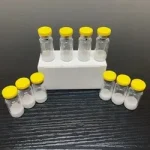
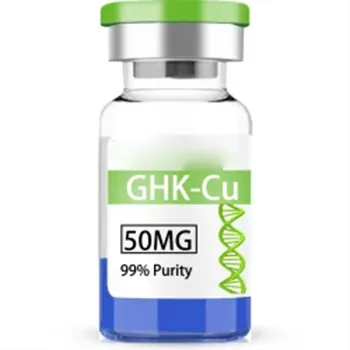
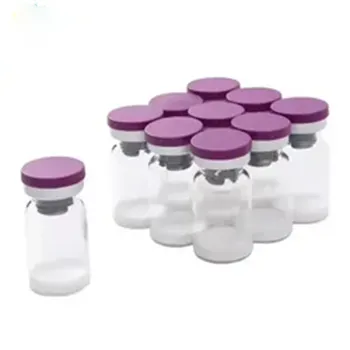
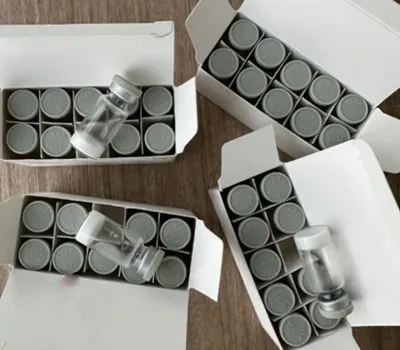
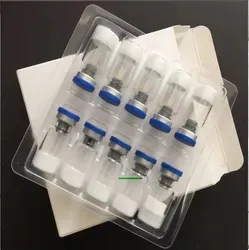
| GHK-CU |
50mg*10vials ,100mg*10vials |
|---|



Reviews
There are no reviews yet.