



Fast Delivery
Quick, reliable shipping to any location.

Free & easy returns
Return this item by mail or in store within 90 days for a full refund.
Cagrilintide + Semaglutide (CagriSema): A Comprehensive Guide to the Dual-Hormone Weight Management Therapy
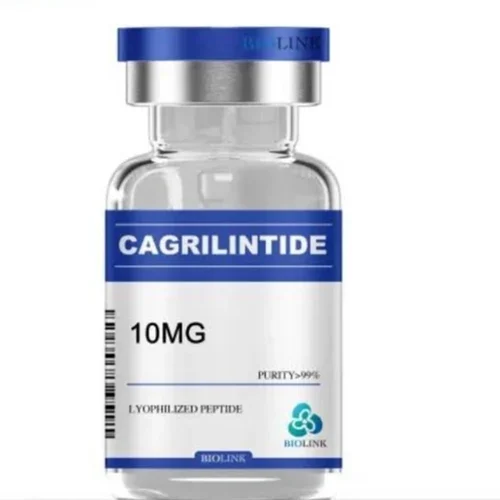
Cagrilintide B5mg + Semaglutide 10mg: The combination of cagrilintide and semaglutide, known as CagriSema, represents a significant advancement in pharmacotherapy for weight management. This dual-agent approach combines a novel long-acting amylin analogue with a well-established GLP-1 receptor agonist, demonstrating remarkable efficacy in recent large-scale clinical trials. This guide provides an in-depth look at the science, clinical trial results, and practical considerations surrounding this therapy.
Table of Contents
-
What is CagriSema?
-
Mechanism of Action
-
Semaglutide: The GLP-1 Receptor Agonist
-
Cagrilintide: The Amylin Analogue
-
Synergistic Effects of Combination Therapy
-
-
Clinical Trial Results
-
REDEFINE 1: Patients Without Diabetes
-
REDEFINE 2: Patients with Type 2 Diabetes
-
REIMAGINE 1: Patients with Early-Stage Type 2 Diabetes
-
Mechanistic Study on Appetite and Energy Intake
-
-
Safety Profile
-
Gastrointestinal Adverse Events
-
Serious Adverse Events and Tolerability
-
-
Regulatory Status and Availability
-
Frequently Asked Questions
-
Conclusion
What is CagriSema?
CagriSema is the investigational co-administration of cagrilintide and semaglutide. It is being developed by Novo Nordisk as a once-weekly, fixed-dose combination for chronic weight management and the treatment of type 2 diabetes . The combination has been evaluated in various doses, with the primary focus on cagrilintide 2.4 mg plus semaglutide 2.4 mg in Phase 3a trials .
Cagrilintide is a long-acting analogue of the satiety hormone amylin, a neuroendocrine hormone co-secreted with insulin by pancreatic beta-cells that promotes fullness and satiety . The combination leverages two complementary pathways to achieve robust weight loss while also improving glycemic control.
Mechanism of Action
Semaglutide: The GLP-1 Receptor Agonist
Semaglutide is a well-established glucagon-like peptide-1 (GLP-1) receptor agonist. It enhances glucose-dependent insulin secretion, suppresses glucagon release, and delays gastric emptying . It also acts centrally to reduce appetite and food intake, contributing to its weight-loss effects. The approved dose for weight management is 2.4 mg once weekly, while the dose for type 2 diabetes is up to 2.0 mg.
Cagrilintide: The Amylin Analogue
Cagrilintide is a long-acting amylin analogue that binds to amylin and calcitonin receptors, which are expressed in areas of the brain involved in appetite regulation . Amylin acts as a satiety hormone, reducing food intake and inhibiting the secretion of glucagon . Unlike semaglutide, cagrilintide is thought to work through distinct pathways to decrease appetite and promote fullness.
Synergistic Effects of Combination Therapy
Preclinical and clinical data suggest complementary effects when these agents are combined. The 2025 REIMAGINE 1 trial noted that the combination may provide additional treatment benefits compared to the monocomponents, with targeting of both amylin and GLP-1 biology providing complementary effects on weight and glucose . A mechanistic study published in 2025 characterized the effects of CagriSema on appetite and energy intake, finding significant reductions in ad libitum energy intake, hunger, and cravings(Cagrilintide B5mg + Semaglutide 10mg) .
Clinical Trial Results
REDEFINE 1: Patients Without Diabetes
The REDEFINE 1 trial, published in the New England Journal of Medicine in June 2025, was a Phase 3a, 68-week, double-blind, placebo-controlled trial involving 3,417 participants . Participants had a BMI of 30 or higher, or a BMI of 27 or higher with at least one obesity-related complication.
Key Findings :
| Outcome | CagriSema (2.4 mg each) | Semaglutide 2.4 mg | Cagrilintide 2.4 mg | Placebo |
|---|---|---|---|---|
| Mean Weight Change | -20.4% | -14.9% | -11.5% | -3.0% |
| Weight Reduction ≥5% | Not reported individually | Not reported individually | Not reported individually | Not reported individually |
The estimated difference vs. placebo in body weight change was -17.3 percentage points (95% CI, -18.1 to -16.6; P<0.001) . Participants receiving CagriSema were significantly more likely to achieve weight-loss targets of 20%, 25%, and 30% or more (P<0.001 for all comparisons) .
REDEFINE 2: Patients with Type 2 Diabetes
The REDEFINE 2 trial, also published in the NEJM, evaluated CagriSema in 1,206 adults with type 2 diabetes and a BMI of 27 or higher . Participants were randomized to receive CagriSema (2.4 mg each) or placebo for 68 weeks.
Key Findings :
| Outcome | CagriSema (2.4 mg each) | Placebo |
|---|---|---|
| Mean Weight Change | -13.7% | -3.4% |
| Difference vs. Placebo | -10.4 percentage points | — |
| HbA1c ≤6.5% Achieved | 73.5% | 15.9% |
| Weight Reduction ≥5% | 83.6% | 30.8% |
The estimated mean change in body weight from baseline to week 68 was -13.7% in the CagriSema group vs. -3.4% in the placebo group (estimated difference, -10.4 percentage points; 95% CI, -11.2 to -9.5; P<0.001) .
REIMAGINE 1: Patients with Early-Stage Type 2 Diabetes
Published in The Lancet Diabetes & Endocrinology in June 2026, REIMAGINE 1 evaluated CagriSema in 189 patients with early-stage type 2 diabetes inadequately controlled with diet and exercise .
Key Findings :
| Outcome | CagriSema (2.4 mg each) | CagriSema (1.0 mg each) | Placebo |
|---|---|---|---|
| Mean HbA1c Change | -1.8 percentage points | -1.5 percentage points | -0.1 percentage points |
| Mean Weight Change | -13.8% | -11.8% | -1.4% |
| Weight Change Difference vs. Placebo | -12.4 percentage points | -10.4 percentage points | — |
Mechanistic Study on Appetite and Energy Intake
A 2025 study published in Diabetes evaluated the effects of CagriSema on energy intake, appetite, and gastric emptying in 62 participants with overweight or obesity . CagriSema was dose-escalated to a maintenance dose of 2.4 mg/2.4 mg once weekly.
Key Findings :
-
Ad libitum energy intake decreased by 63% with CagriSema (vs. a 2% increase with placebo)
-
Craving control was substantially improved (3.3 vs. -0.3 points in placebo)
-
Cravings for sweets and savory food were significantly reduced
-
Hunger and prospective food consumption were significantly reduced
-
Fullness and satiety were increased
-
No delay in gastric emptying was observed, suggesting the primary mechanism is centrally mediated appetite suppression
Safety Profile
Gastrointestinal Adverse Events
The most common adverse events were gastrointestinal in nature, consistent with the GLP-1 receptor agonist class .
| Trial | CagriSema Group | Placebo Group |
|---|---|---|
| REDEFINE 1 | 79.6% | 39.9% |
| REDEFINE 2 | 72.5% | 34.4% |
| REIMAGINE 1 | 79% | 66% |
In all trials, the majority of gastrointestinal events were characterized as transient and mild to moderate in severity .
Serious Adverse Events and Tolerability
No unexpected safety findings were reported in the trials . Withdrawal rates varied but were consistent with those observed in other GLP-1-based therapies. The safety profile is considered acceptable for a chronic weight-management therapy, though long-term cardiovascular outcome data are still pending.
Regulatory Status and Availability
As of June 2026, CagriSema (cagrilintide + semaglutide) is an investigational drug and has not received FDA or EMA approval . It is currently being evaluated in the ongoing Phase 3a clinical trial program.
Ongoing/Completed Clinical Trials :
-
REDEFINE 1: Completed (patients without diabetes, n=3417)
-
REDEFINE 2: Completed (patients with type 2 diabetes, n=1206)
-
REIMAGINE 1: Completed (early-stage type 2 diabetes, n=189)
-
REIMAGINE 2: Active, not recruiting (type 2 diabetes with metformin/SGLT2i, n=2734)
-
Ongoing CVOT: Cardiovascular outcomes trial expected to report in the coming years
Novo Nordisk is expected to file for regulatory approval in 2026-2027, based on the strength of the REDEFINE and REIMAGINE programs.
Frequently Asked Questions
What is CagriSema?
CagriSema is the investigational once-weekly co-administration of cagrilintide 2.4 mg (a long-acting amylin analogue) and semaglutide 2.4 mg (a GLP-1 receptor agonist) for chronic weight management and type 2 diabetes treatment .
How does CagriSema work for weight loss?
CagriSema works through complementary mechanisms: semaglutide reduces appetite and slows gastric emptying, while cagrilintide promotes satiety and fullness. Together, they produce a synergistic reduction in food intake and energy consumption .
What were the results of the REDEFINE 1 trial?
In REDEFINE 1 (patients without diabetes), CagriSema produced a mean weight loss of 20.4% from baseline after 68 weeks, compared to 3.0% with placebo. This represents a difference of 17.3 percentage points (P<0.001) .
What were the results of the REDEFINE 2 trial?
In REDEFINE 2 (patients with type 2 diabetes), CagriSema produced a mean weight loss of 13.7% from baseline, compared to 3.4% with placebo. Additionally, 73.5% of CagriSema-treated patients achieved an HbA1c ≤6.5% .
Does CagriSema work better than semaglutide alone?
Yes. In REDEFINE 1, CagriSema produced 20.4% weight loss compared to 14.9% with semaglutide 2.4 mg alone . This represents a clinically meaningful difference in efficacy.
What is cagrilintide?
Cagrilintide is a long-acting analogue of the satiety hormone amylin. It works by reducing appetite and increasing the feeling of fullness after meals .
What are the side effects of CagriSema?
The most common side effects are gastrointestinal, including nausea, vomiting, diarrhea, constipation, and abdominal pain. In REDEFINE 1, GI events occurred in 79.6% of CagriSema-treated patients vs. 39.9% of placebo-treated patients . Most events were transient and mild-to-moderate in severity.
Is CagriSema approved for use?
No. As of June 2026, CagriSema is an investigational drug and has not yet received regulatory approval . Phase 3 trials are complete, and regulatory submissions are expected in the near future.
Does CagriSema work in patients with type 2 diabetes?
Yes. In REDEFINE 2, CagriSema reduced body weight by 13.7% and achieved excellent glycemic control (73.5% reached HbA1c ≤6.5%) in patients with type 2 diabetes .
What is the dosage of CagriSema?
The dose evaluated in Phase 3 trials is a fixed combination of cagrilintide 2.4 mg + semaglutide 2.4 mg, administered once weekly via subcutaneous injection . Dose escalation is performed over several weeks to improve tolerability.
Conclusion
CagriSema represents a promising next-generation therapy for chronic weight management, combining the complementary mechanisms of a GLP-1 receptor agonist and an amylin analogue. The Phase 3 REDEFINE and REIMAGINE trials have demonstrated robust efficacy, with mean weight reductions of 15-20% and substantial glycemic improvements in patients with type 2 diabetes .
While gastrointestinal adverse events are common, they are generally transient and acceptable. The therapy offers an important advancement over semaglutide monotherapy, with a synergistic effect that produces greater weight loss across diverse patient populations.
Pending regulatory approval, CagriSema is expected to become a significant new option for obesity and type 2 diabetes management, with ongoing cardiovascular outcome trials likely to further define its role in clinical practice.







Reviews
There are no reviews yet.