


Fast Delivery
Quick, reliable shipping to any location.

Free & easy returns
Return this item by mail or in store within 90 days for a full refund.
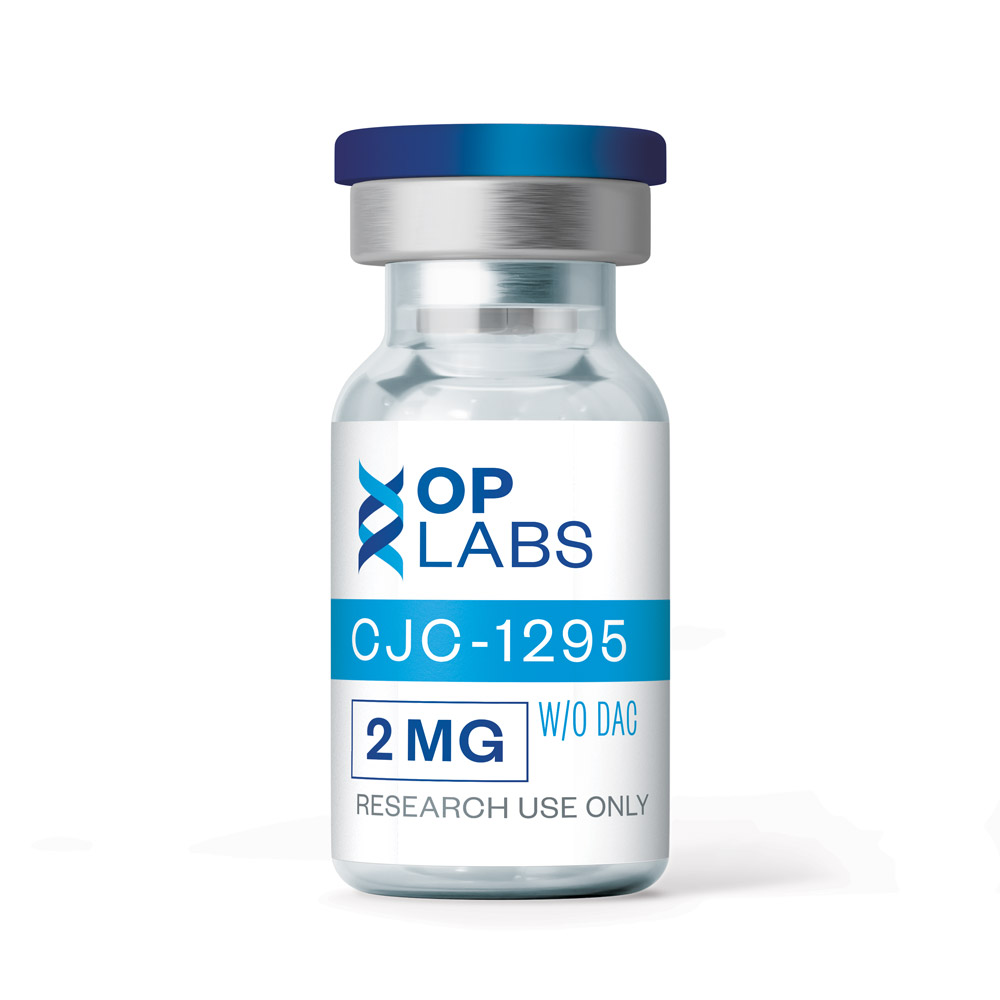
CJC-1295 Without DAC: Research Peptide for Modulating Growth Hormone Release
CJC-1295 without DAC (also known as Mod GRF 1-29) is a synthetic peptide analogue of growth hormone-releasing hormone (GHRH) designed to stimulate endogenous growth hormone release from the pituitary gland. This comprehensive guide examines its proposed mechanism, the critical differences between the “with DAC” and “without DAC” variants, and the current state of research evidence.
Table of Contents
-
What is CJC-1295 Without DAC?
-
Mechanism of Action
-
CJC-1295 With DAC vs. Without DAC
-
Current Research Status
-
Safety Profile and Identified Risks
-
Regulatory Status and Legal Considerations
-
Frequently Asked Questions
-
Conclusion
What is CJC-1295 Without DAC?
CJC-1295 without DAC is a synthetic 30-amino-acid peptide analogue of growth hormone-releasing hormone (GHRH), a naturally occurring hormone that stimulates the production and release of growth hormone by the pituitary gland. It is a modified form of GHRH (1-29), also known as Sermorelin, that has been modified to enhance its stability compared to the original GHRH sequence.
The peptide is sometimes referred to as Mod GRF 1-29 (Modified Growth Hormone Releasing Factor 1-29) and has the sequence: Tyr-D-Ala-Asp-Ala-Ile-Phe-Thr-Gln-Ser-Tyr-Arg-Lys-Val-Leu-Ala-Gln-Leu-Ser-Ala-Arg-Lys-Leu-Leu-Gln-Asp-Ile-Leu-Ser-Arg-NH2.
The “without DAC” designation distinguishes this variant from the original CJC-1295 developed by ConjuChem Technologies, which contained a proprietary Drug Affinity Complex (DAC) technology designed to extend the peptide’s half-life. The non-DAC version lacks this modification and is understood to have a significantly shorter duration of activity.

Mechanism of Action
CJC-1295 without DAC functions by mimicking the action of endogenous GHRH. Upon administration, it binds to GHRH receptors on somatotroph cells in the anterior pituitary gland, triggering the release of growth hormone (GH) into the bloodstream. This, in turn, leads to an increase in circulating insulin-like growth factor 1 (IGF-1), which mediates many of the physiological effects associated with GH, such as metabolic regulation and muscle growth.
A key theoretical difference between CJC-1295 without DAC and the DAC-containing version lies in the pattern of GH release it is thought to produce.
CJC-1295 without DAC is understood to stimulate the release of GH in a pulsatile manner, which more closely mimics the body’s natural secretion patterns. The short half-life means GH levels are expected to spike and then return to baseline relatively quickly. This is aligned with the physiological norm, as endogenous GH is released in pulses, primarily during sleep.
By contrast, CJC-1295 with DAC has an extended half-life of approximately 5.8–8 days, which results in a more sustained, continuous elevation of GH and IGF-1 levels over a longer period. This prolonged elevation is a key safety concern, as it may carry an increased risk of side effects and does not follow a natural physiological model of action.
CJC-1295 With DAC vs. Without DAC
The distinction between the two forms of CJC-1295 is crucial to understanding their respective properties and research applications.
| Feature | CJC-1295 Without DAC | CJC-1295 With DAC |
|---|---|---|
| Structure | Modified GHRH (1-29) without the DAC modification. | Modified GHRH with the Drug Affinity Complex (DAC). |
| Half-Life | Short; typically understood to be around 30 minutes to an hour. | Long; approximately 5.8–8 days in healthy adults. |
| Proposed Mechanism | Stimulates pulsatile GH release, mimicking natural patterns. | Stimulates a sustained, non-physiological GH release. |
| Dosing Frequency | Requires frequent dosing, often multiple times per day. | Less frequent dosing, potentially once or twice per week. |
| Human Clinical Evidence | None; no peer-reviewed clinical studies have been reported. | Limited; Phase I PK/PD studies have been conducted in healthy adults. |
Current Research Status
The research and regulatory status of CJC-1295 without DAC is a critical point to understand.
-
Lack of Human Clinical Data: According to the most up-to-date scientific reviews, there are no peer-reviewed clinical studies in humans that have reported the use of CJC-1295 without DAC. An evidence tier classification system published in June 2026 places it in the lowest category (“Tier D”), indicating a complete absence of human studies. This is a critical distinction from the DAC version, which has at least undergone Phase I studies.
-
First Documentation: The compound appears to have first been referenced in the literature in 2010, following the identification of an unknown pharmaceutical preparation seized by Norwegian authorities.
-
FDA Evaluation: In its evaluation for placement on the 503A Bulks List, the FDA concluded that the available data weighs against adding CJC-1295 (free base) and CJC-1295 acetate to the list. This conclusion was based on a balancing of criteria, including a lack of evidence for pharmacological activity, insufficient safety data for the “without DAC” form, and an uncertain risk of immunogenicity.

Safety Profile and Identified Risks
The safety data for CJC-1295 without DAC is extremely limited, and existing information is largely inferred from studies on the DAC-containing version or is of an anecdotal nature.
-
Inferred from CJC-1295 DAC Studies: Safety signals identified in nonclinical toxicological studies of CJC-1295 DAC included local irritation (hemorrhage, inflammation, and necrosis at the injection site) and genotoxicity signals characterized by DNA damage in pituitary cells. The FDA also noted that the potential for pituitary gland hyperplasia and tumors due to overstimulation by CJC-1295 cannot be ruled out. Whether these findings apply to the “without DAC” form is unknown.
-
Risk of Immunogenicity: There is a concern that the high degree of homology (86%) that CJC-1295-related substances have with endogenous GHRH could result in the formation of cross-reactive antibodies, potentially leading to autoimmune effects. The lack of long-term, repeated exposure data means the true risk of antibody formation is unknown.
-
Adverse Events from DAC Studies: The most commonly reported adverse events in healthy subjects receiving CJC-1295 DAC were injection site reactions. Other reported effects include systemic vasodilatory reactions, headache, nausea, abdominal pain, diarrhea, and transient dizziness.
-
General Peptide Risks: As with other peptides that modulate the GH-IGF-1 axis, there are biologically plausible but unproven concerns related to mitogenic signaling, which could theoretically promote tumor growth. The long-term safety profile for chronic use is entirely unknown.
Regulatory Status and Legal Considerations
-
FDA Approval: CJC-1295 is not FDA-approved for any indication. It is classed as an Investigational New Drug in the United States, meaning it is available exclusively to researchers as a reference material and not for human use.
-
503A Bulks List: The FDA has weighed against adding CJC-1295 free base and CJC-1295 acetate to the 503A Bulks List for compounding, citing a lack of evidence for pharmacological activity, insufficient safety information, and no demonstrated effectiveness.
-
WADA Prohibited Status: CJC-1295 is classified as a prohibited substance under Section S2 of the World Anti-Doping Agency’s (WADA) Prohibited List.
-
Not for Human Use: CJC-1295 without DAC is sold as a research compound and is not legally marketed for human consumption.
Frequently Asked Questions
What is the difference between CJC-1295 with DAC and without DAC?
CJC-1295 with DAC has a Drug Affinity Complex that gives it an extended half-life of approximately 8 days, causing a sustained elevation in GH levels. CJC-1295 without DAC has a short half-life (30-60 minutes) and is proposed to stimulate GH release in a more natural, pulsatile manner.
Does CJC-1295 without DAC have any human clinical trial data?
No. As of June 2026, there are no published, peer-reviewed clinical studies in humans for CJC-1295 without DAC.
What are the potential side effects of CJC-1295?
Adverse events reported from studies on CJC-1295 DAC include injection site reactions, headaches, nausea, and transient dizziness. Safety signals from animal studies include injection site irritation and potential DNA damage in pituitary cells.
Is CJC-1295 FDA-approved?
No, CJC-1295 is not FDA-approved for any indication. The FDA has concluded that the evidence does not support its addition to the 503A Bulks List for compounding.
What is the mechanism of CJC-1295?
CJC-1295 without DAC is a synthetic analogue of GHRH. It is designed to bind to GHRH receptors on the pituitary gland to stimulate the release of endogenous growth hormone in a pulsatile manner.
Is CJC-1295 legal to buy?
It can be purchased as a research compound for laboratory use. However, it is not legally sold for human consumption and is a prohibited substance in sports under WADA regulations.
Is CJC-1295 safe?
The safety profile for CJC-1295 without DAC is unknown due to a complete lack of human data. For the DAC-containing version, long-term safety studies are lacking. There are significant theoretical risks, including immunogenicity and potential stimulation of abnormal cell growth.
Conclusion
CJC-1295 without DAC is a synthetic peptide that has gained attention for its theoretical ability to modulate the growth hormone axis. While it presents an alternative approach to its DAC-containing counterpart by purportedly aiming for a more physiological, pulsatile release of GH, it is critically important to recognize that this effect remains a hypothesis.
A major distinction between the two forms lies in the available evidence. While the DAC-containing version has at least undergone Phase I clinical studies, CJC-1295 without DAC has no published peer-reviewed human studies. This absence of data places it in the lowest tier of scientific evidence. The peptide is not FDA-approved, is banned by WADA, and the FDA has recently weighed against its addition to the 503A Bulks List for compounding due to concerns about its pharmacological activity and safety.
The limited available research is focused on this compound’s potential as a research tool for studying the endocrine system and growth hormone release, not as an approved therapeutic or performance-enhancing substance.
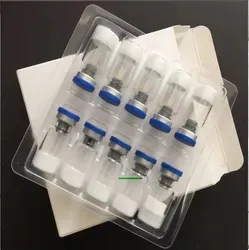
| CJC-1295 Without DAC |
5mg*1-0vials ,10mg*10vials |
|---|








Reviews
There are no reviews yet.