


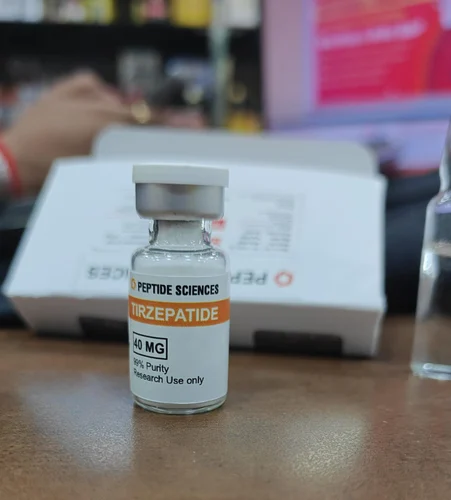
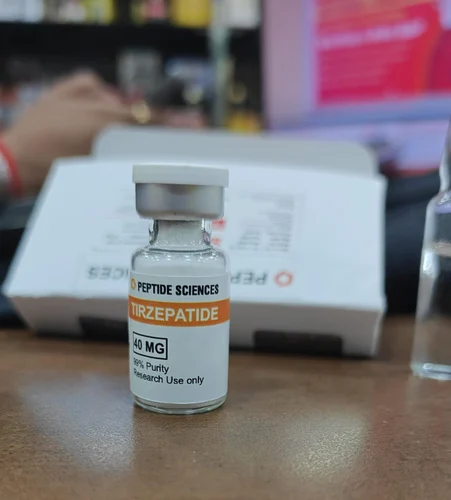
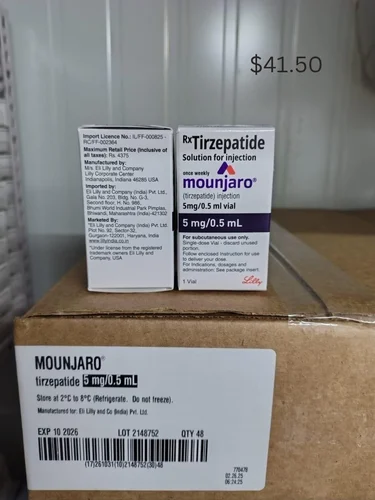
Tirzepatide
$45.00 – $400.00Price range: $45.00 through $400.00
Tirzepatide represents a paradigm shift in the treatment of obesity and metabolic disease. As a dual GIP and GLP-1 receptor agonist, tirzepatide offers a unique mechanism of action that produces superior weight loss outcomes compared to other available medications.
You’re now subscribed to price tracking for this product. We’ll notify you if the price drops.

Fast Delivery
Quick, reliable shipping to any location.

Free & easy returns
Return this item by mail or in store within 90 days for a full refund.
Tirzepatide: The Complete Guide to This Breakthrough Dual-Agonist Medication
Tirzepatide has emerged as one of the most significant advances in metabolic medicine, offering remarkable efficacy for weight management, type 2 diabetes, and obstructive sleep apnea. As a first-in-class dual GIP and GLP-1 receptor agonist, tirzepatide works differently from other medications in its class, activating two natural hormone receptors to produce powerful effects on appetite, food intake, and metabolism . This comprehensive guide explores everything you need to know about tirzepatide, from its mechanism of action to clinical outcomes and safety considerations.
Table of Contents
-
What is Tirzepatide?
-
How Does Tirzepatide Work?
-
FDA-Approved Indications for Tirzepatide
-
Tirzepatide for Weight Loss: Clinical Outcomes
-
Tirzepatide vs. Semaglutide: Head-to-Head Comparison
-
Tirzepatide Dosage and Administration
-
Tirzepatide Side Effects and Safety
-
Tirzepatide Mechanism of Action Research
-
Frequently Asked Questions (FAQs)
-
Final Verdict
What is Tirzepatide? {#what-is-tirzepatide}
Tirzepatide is a prescription injectable medication that acts as an agonist at two important hormone receptors: the glucose-dependent insulinotropic polypeptide (GIP) receptor and the glucagon-like peptide-1 (GLP-1) receptor . It is a 39-amino acid modified peptide similar in structure to GIP, designed to activate both receptor types to improve metabolic control .
Tirzepatide is marketed under two brand names depending on the indication:
-
Zepbound® for weight management and obstructive sleep apnea
-
Mounjaro® for type 2 diabetes
The U.S. Food and Drug Administration initially approved tirzepatide for type 2 diabetes in 2022, followed by approval for obesity (under the brand name Zepbound) in 2024 . Tirzepatide is administered as a once-weekly subcutaneous injection and is available in six dosage strengths: 2.5 mg, 5 mg, 7.5 mg, 10 mg, 12.5 mg, and 15 mg per 0.5 mL .
Key Facts About Tirzepatide
| Attribute | Details |
|---|---|
| Drug Class | Dual GIP and GLP-1 receptor agonist |
| Molecular Weight | 858.9 g/mol |
| Amino Acid Count | 39 |
| Brand Names | Zepbound® (weight/OSA), Mounjaro® (diabetes) |
| Administration | Subcutaneous injection, once weekly |
| Dosage Strengths | 2.5, 5, 7.5, 10, 12.5, 15 mg |
| Initial FDA Approval | 2022 (type 2 diabetes) |

How Does Tirzepatide Work? {#how-does-tirzepatide-work}
Tirzepatide’s unique mechanism of action sets it apart from other medications in its class. Unlike selective GLP-1 receptor agonists, tirzepatide activates both GIP and GLP-1 receptors, creating a synergistic effect that produces greater metabolic benefits .
The Dual-Agonist Mechanism
GIP Receptor Activation: Tirzepatide mimics the actions of native GIP at the GIP receptor. Research indicates that tirzepatide has a greater degree of engagement with the GIP receptor than with the GLP-1 receptor, suggesting an imbalanced mechanism of action that may contribute to its superior efficacy .
GLP-1 Receptor Activation: At the GLP-1 receptor, tirzepatide demonstrates biased agonism. It favors cAMP generation over β-arrestin recruitment and has a weaker ability to drive GLP-1 receptor internalization compared to native GLP-1. This unique signaling profile may enhance insulin secretion .
Effects on the Body
Tirzepatide therapy produces several beneficial effects :
-
Increases insulin secretion in response to meals
-
Decreases glucagon secretion, reducing hepatic glucose production
-
Delays gastric emptying, promoting satiety
-
Reduces appetite and food intake, leading to weight loss
-
Increases insulin sensitivity through multiple pathways
Impact on Metabolism
Recent research published in the journal Cell Metabolism provides important insights into how tirzepatide promotes weight loss. In a phase 1 clinical trial, tirzepatide was found to increase fat oxidation while reducing appetite and calorie intake during test meals. Interestingly, unlike in preclinical mouse studies, tirzepatide did not appear to impact metabolic adaptation in humans—the weight loss effects were primarily driven by reduced calorie intake and increased fat oxidation .
FDA-Approved Indications for Tirzepatide {#fda-approved-indications}
Tirzepatide has received FDA approval for multiple indications, all in combination with a reduced-calorie diet and increased physical activity .
1. Weight Management
Zepbound (tirzepatide) is indicated for adults with:
-
Obesity (BMI ≥ 30 kg/m²), OR
-
Overweight (BMI ≥ 27 kg/m²) with at least one weight-related comorbid condition
The goal is to reduce excess body weight and maintain weight reduction long term .
2. Obstructive Sleep Apnea
Zepbound is also indicated for adults with moderate-to-severe obstructive sleep apnea (OSA) and obesity to improve their OSA . The recommended maintenance doses for OSA are 10 mg or 15 mg weekly .
3. Type 2 Diabetes
Mounjaro (tirzepatide) is indicated as an adjunct to diet and exercise to improve glycemic control in adults with type 2 diabetes .
Important Limitations of Use
Tirzepatide should not be used with other tirzepatide-containing products or any GLP-1 receptor agonist medicines. The safety and efficacy of tirzepatide in children have not been established .
Tirzepatide for Weight Loss: Clinical Outcomes {#tirzepatide-weight-loss-clinical-outcomes}
The weight loss outcomes achieved with tirzepatide in clinical trials have been remarkable, representing some of the most significant results ever seen with a pharmacologic intervention for obesity.
SURMOUNT-1 Trial Results
In the pivotal 72-week SURMOUNT-1 clinical trial, participants with obesity but without diabetes received tirzepatide or placebo as an adjunct to lifestyle intervention. The results were :
| Tirzepatide Dose | Mean Weight Loss |
|---|---|
| 5 mg weekly | 15.0% |
| 10 mg weekly | 19.5% |
| 15 mg weekly | 20.9% |
| Placebo | 3.1% |
Long-Term Weight Loss Data
Tirzepatide therapy has been associated with sustained weight loss of 16 to 24 kilograms after 72 weeks of treatment .
How Tirzepatide Promotes Weight Loss
Research has identified several mechanisms through which tirzepatide promotes weight loss :
-
Reduced appetite and calorie intake during meals
-
Increased fat oxidation, shown by a decreased respiratory exchange ratio
-
Reduction in food cravings and improved satiety signals
In clinical studies, most gastrointestinal side effects such as nausea, diarrhea, and vomiting occurred when patients increased their dose, and these effects generally decreased over time .
Tirzepatide vs. Semaglutide: Head-to-Head Comparison {#tirzepatide-vs-semaglutide}
The SURMOUNT-5 trial, published in the New England Journal of Medicine, provided the first head-to-head comparison of tirzepatide and semaglutide in adults with obesity but without type 2 diabetes .
Study Design
A total of 751 participants were randomly assigned to receive the maximum tolerated dose of either:
-
Tirzepatide (10 mg or 15 mg) once weekly, OR
-
Semaglutide (1.7 mg or 2.4 mg) once weekly
The trial lasted 72 weeks .
Key Results
| Outcome | Tirzepatide | Semaglutide |
|---|---|---|
| Mean Weight Loss | 20.2% | 13.7% |
| Waist Circumference Reduction | 18.4 cm | 13.0 cm |
| Weight Loss ≥10% | Higher likelihood | Lower likelihood |
| Weight Loss ≥15% | Higher likelihood | Lower likelihood |
| Weight Loss ≥20% | Higher likelihood | Lower likelihood |
| Weight Loss ≥25% | Higher likelihood | Lower likelihood |
Conclusion
The SURMOUNT-5 trial demonstrated that tirzepatide was superior to semaglutide with respect to reduction in body weight and waist circumference at week 72 . The most common adverse events in both treatment groups were gastrointestinal, and most were mild to moderate in severity and occurred primarily during dose escalation .

Tirzepatide Dosage and Administration {#tirzepatide-dosage}
Tirzepatide is administered as a once-weekly subcutaneous injection, with a gradual dose escalation schedule to minimize gastrointestinal side effects .
Recommended Dose Escalation Schedule
| Weeks | Dose |
|---|---|
| Weeks 1-4 | 2.5 mg (starting dose) |
| Weeks 5-8 | 5 mg |
| After at least 4 weeks on current dose | Increase in 2.5 mg increments |
| Maintenance for Weight Loss | 5 mg, 10 mg, or 15 mg |
| Maintenance for OSA | 10 mg or 15 mg |
Important Notes:
-
The 2.5 mg dose is a starting dose and is not an approved maintenance dose
-
The maximum recommended dosage is 15 mg once weekly
-
Dose increases should be made after at least 4 weeks on the current dose
How to Administer Tirzepatide
Tirzepatide can be injected under the skin at home, with or without food, once a week :
-
Injection Sites: Stomach (abdomen), thigh, or back of the upper arm (with assistance)
-
Rotation: Change (rotate) injection site with each weekly injection; do not use the same site for each injection
-
Do Not Inject: Into a muscle (intramuscularly) or vein (intravenously)
Available Devices
Tirzepatide is available in three device formats :
-
Single-dose pen (no need to see or handle the needle)
-
Single-dose vial (administered with a needle and syringe)
-
KwikPen® (for single-patient use, with compatible pen needle)
Important: Never share a tirzepatide KwikPen between people, even if the pen needle is changed, as this poses a risk for serious infection .
Tirzepatide Side Effects and Safety {#tirzepatide-side-effects}
Boxed Warning: Thyroid C-Cell Tumors
Tirzepatide carries a Boxed Warning for the risk of thyroid C-cell tumors. In studies with rats, tirzepatide caused thyroid C-cell tumors . It is unknown whether this risk translates to humans, as the human relevance of tirzepatide-induced rodent thyroid C-cell tumors has not been determined .
Contraindications:
-
Personal or family history of medullary thyroid carcinoma (MTC)
-
Multiple Endocrine Neoplasia syndrome type 2 (MEN 2)
-
Known serious hypersensitivity to tirzepatide or any of its ingredients
Symptoms to Watch For: Lump or swelling in the neck, hoarseness, trouble swallowing, or shortness of breath. Tell your healthcare provider if you experience any of these symptoms .
Most Common Side Effects
The most common adverse reactions reported in ≥5% of patients treated with tirzepatide include :
| Side Effect | Category |
|---|---|
| Nausea | Gastrointestinal |
| Diarrhea | Gastrointestinal |
| Vomiting | Gastrointestinal |
| Constipation | Gastrointestinal |
| Abdominal pain | Gastrointestinal |
| Dyspepsia (indigestion) | Gastrointestinal |
| Injection site reactions | Local |
| Fatigue | Systemic |
| Hypersensitivity reactions | Allergic |
| Belching | Gastrointestinal |
| Hair loss | Other |
| Heartburn (GERD) | Gastrointestinal |
In studies, most nausea, diarrhea, and vomiting occurred when people increased their dose, but the effects generally decreased over time .
Serious Side Effects
Tirzepatide may cause serious side effects, including :
-
Severe stomach problems – Tell your healthcare provider if you have stomach problems that are severe or will not go away
-
Dehydration leading to kidney problems – Diarrhea, nausea, and vomiting may cause fluid loss; drink fluids to reduce your chance of dehydration
-
Gallbladder problems – Symptoms include pain in upper stomach, fever, yellowing of skin or eyes, or clay-colored stools
-
Inflammation of the pancreas (pancreatitis) – Stop use and call your doctor right away if you have severe stomach pain that won’t go away, with or without nausea or vomiting
-
Serious allergic reactions – Symptoms include swelling of face, lips, tongue, or throat, problems breathing or swallowing, severe rash or itching, fainting or dizziness, or rapid heartbeat
-
Low blood sugar (hypoglycemia) – Risk is higher when used with sulfonylureas or insulin; signs include dizziness, sweating, confusion, headache, blurred vision, shakiness, fast heartbeat, anxiety, and weakness
-
Changes in vision in patients with type 2 diabetes
-
Food or liquid getting into the lungs during anesthesia or deep sedation – Tell all healthcare providers that you are taking tirzepatide before surgery or procedures
Liver Safety
Tirzepatide has been linked to minimal instances of elevations in serum aminotransferase levels during therapy and rare episodes of clinically apparent liver injury . However, because tirzepatide causes weight loss, it can be accompanied by improvements in serum aminotransferase levels in patients with preexisting nonalcoholic fatty liver disease .
Suicidal Behavior and Ideation
Tirzepatide may be associated with suicidal behavior and ideation. Healthcare providers should monitor for depression or suicidal thoughts, and tirzepatide should be discontinued if symptoms develop .
Tirzepatide Mechanism of Action Research {#tirzepatide-mechanism-of-action}
Beyond its effects on weight and glucose control, ongoing research is uncovering additional mechanisms through which tirzepatide may benefit metabolic health.
Targeting Adipose Tissue Inflammation
Obesity is associated with chronic low-grade inflammation, driven in part by the infiltration of pro-inflammatory M1-type macrophages into adipose tissue. A recent study published in International Immunopharmacology explored tirzepatide’s effects on this process .
Key Findings:
-
Tirzepatide treatment significantly mitigated the infiltration of pro-inflammatory M1 macrophages within visceral adipose tissue in obese mice
-
Tirzepatide reduced levels of inflammatory cytokines such as TNF-α and IL-6
-
The therapeutic efficacy was mediated through modulation of the ERK signaling pathway and promotion of M1-type macrophage apoptosis
-
Tirzepatide improved insulin sensitivity and reduced insulin resistance
The study concluded that tirzepatide has potential as a therapeutic strategy for addressing metabolic diseases associated with obesity and type 2 diabetes by targeting adipose tissue macrophage activity and mitigating obesity-associated inflammation .
Research in Special Populations
Adolescents: A phase 3 clinical trial (SURMOUNT-ADOLESCENTS) is evaluating the safety and efficacy of tirzepatide in adolescent participants who have obesity or are overweight with weight-related comorbidities. The study will last approximately 90 weeks and includes up to 25 visits .
Type 1 Diabetes: A long-term study (SURPASS-T1D-2) is evaluating tirzepatide in adults with type 1 diabetes and obesity or overweight. The main purpose is to understand how well and how safely tirzepatide works in this population .
Real-World Evidence: A phase 4 study (SURMOUNT-REAL UK) is evaluating tirzepatide in a real-world setting to assess body weight loss and incidence of type 2 diabetes in adults without diabetes who have obesity and at least one weight-related comorbid condition .
Frequently Asked Questions (FAQs) {#tirzepatide-faqs}
1. What is tirzepatide used for?
Tirzepatide is approved for weight management in adults with obesity or overweight with weight-related conditions, for obstructive sleep apnea in adults with obesity, and for type 2 diabetes .
2. How does tirzepatide work for weight loss?
Tirzepatide activates GIP and GLP-1 receptors to reduce appetite and food intake, increase fat oxidation, and help people eat less .
3. What is the difference between tirzepatide and semaglutide?
Tirzepatide is a dual GIP and GLP-1 receptor agonist, while semaglutide is a selective GLP-1 receptor agonist. In head-to-head trials, tirzepatide achieved superior weight loss (20.2%) compared to semaglutide (13.7%) .
4. What is the recommended tirzepatide dosage?
The starting dose is 2.5 mg once weekly for 4 weeks, then increased in 2.5 mg increments every 4 weeks. Maintenance doses are 5 mg, 10 mg, or 15 mg for weight loss .
5. What are the most common tirzepatide side effects?
The most common side effects are nausea, diarrhea, vomiting, constipation, abdominal pain, and indigestion. These typically occur during dose escalation and decrease over time .
6. Is tirzepatide safe?
Tirzepatide has a Boxed Warning for thyroid C-cell tumors. It is contraindicated in people with a personal or family history of medullary thyroid carcinoma or MEN 2 . Common side effects are generally manageable and improve over time.
7. Can children take tirzepatide?
It is not known if tirzepatide is safe and effective for use in children. Clinical trials are ongoing in adolescents .
8. How is tirzepatide administered?
Tirzepatide is administered as a once-weekly subcutaneous injection in the stomach, thigh, or back of the upper arm. It can be given at any time of day, with or without food .
9. Does tirzepatide interact with other medications?
Tirzepatide should not be used with other tirzepatide-containing products or any GLP-1 receptor agonist medicines. The risk of hypoglycemia is increased when used with insulin or sulfonylureas .
10. What should I do before surgery while taking tirzepatide?
Tell all your healthcare providers that you are taking tirzepatide before surgery or other procedures, as it may increase the chance of food or liquid getting into the lungs during anesthesia .
Final Verdict {#tirzepatide-final-verdict}
Tirzepatide represents a paradigm shift in the treatment of obesity and metabolic disease. As a dual GIP and GLP-1 receptor agonist, tirzepatide offers a unique mechanism of action that produces superior weight loss outcomes compared to other available medications.
Key Takeaways
-
Superior Efficacy: Tirzepatide consistently demonstrates greater weight loss than other medications, with patients achieving 15-21% weight loss in clinical trials .
-
Dual Mechanism: Tirzepatide’s unique activation of both GIP and GLP-1 receptors creates synergistic effects that may explain its superior outcomes .
-
Multiple Indications: Tirzepatide is approved for weight management, obstructive sleep apnea, and type 2 diabetes .
-
Favorable Comparison: In head-to-head studies, tirzepatide outperformed semaglutide in weight loss and waist circumference reduction .
-
Manageable Side Effects: While gastrointestinal side effects are common, they typically occur during dose escalation and decrease over time .
-
Rigorous Safety Monitoring: The Boxed Warning for thyroid C-cell tumors emphasizes the importance of screening and monitoring in appropriate patients .
Tirzepatide’s remarkable clinical outcomes and growing body of research support its position as a leading treatment option for obesity and related metabolic conditions. As with any prescription medication, it should be used under the guidance of a healthcare provider who can help navigate appropriate dosing, monitor for side effects, and ensure optimal outcomes.
| Tirzepatide |
5mg*10vials ,10mg*10vials ,15mg*10vials ,20mg*10vials ,30mg*10vials ,40mg*10vials ,60mg*10vials ,70mg*10vials ,80mg*10vials ,90mg*10vials ,100mg*10vials ,120mg*10vials |
|---|









Reviews
There are no reviews yet.