
Tesamorelin 5mg
$96.00 – $160.00Price range: $96.00 through $160.00
Order Tesamorelin 5mg & 10mg vials from a trusted U.S. peptide dealer
You’re now subscribed to price tracking for this product. We’ll notify you if the price drops.

Fast Delivery
Quick, reliable shipping to any location.

Free & easy returns
Return this item by mail or in store within 90 days for a full refund.
Tesamorelin 5mg: The Complete Guide to This FDA-Approved Peptide for Visceral Fat Reduction
Tesamorelin has emerged as a groundbreaking therapeutic peptide with a unique and important role in metabolic medicine. As the first and only FDA-approved treatment indicated for the reduction of excess abdominal fat in HIV-infected patients with lipodystrophy, Tesamorelin represents a significant advancement for a population with limited treatment options . This stabilized synthetic peptide analogue of human growth hormone-releasing hormone (GHRH) works by restoring the body’s natural growth hormone secretion pattern, offering targeted benefits for visceral adiposity . This comprehensive guide explores everything you need to know about Tesamorelin 5mg, from its biochemical properties and mechanism of action to clinical outcomes, administration, and safety considerations.
Table of Contents
-
What is Tesamorelin?
-
Biochemical Structure and Properties
-
Mechanism of Action of Tesamorelin
-
FDA-Approved Indication for Tesamorelin
-
Tesamorelin 5mg Clinical Efficacy Data
-
Tesamorelin 5mg Dosing and Administration
-
Tesamorelin Side Effects and Safety Profile
-
Tesamorelin vs. Recombinant Growth Hormone
-
Frequently Asked Questions (FAQs)
-
Final Verdict
What is Tesamorelin? {#what-is-tesamorelin}
Tesamorelin is a stabilized synthetic peptide analogue of the hypothalamic peptide known as growth hormone-releasing hormone (GHRH), also referred to as growth hormone-releasing factor (GRF) . Tesamorelin consists of the 44 amino acid sequence of human GRF, with a 3-hexenoyl group attached to its tyrosine N-terminal residue that provides enhanced stability against enzymatic degradation .
The drug was developed by Theratechnologies in 1995 using their long-acting peptide method, a peptide stabilization process that increases resistance to enzymatic degradation while maintaining natural specificity . This modification results in a more stable compound with a prolonged duration of action, making Tesamorelin more effective in clinical use.
Brand Name and Regulatory Status
Tesamorelin is marketed under the brand name Egrifta . It was approved by the U.S. Food and Drug Administration in 2010 for the treatment of excess abdominal fat in HIV-infected patients with lipodystrophy . In the United States, Egrifta (Tesamorelin) is the first and only FDA-approved treatment for this specific indication .
Biochemical Structure and Properties {#biochemical-structure-properties}
Understanding the molecular structure of Tesamorelin provides insight into its stability and biological activity.
Molecular Specifications
| Attribute | Details |
|---|---|
| Amino Acid Count | 44 |
| Molecular Formula | C₂₂₁H₃₆₆N₇₂O₆₇S |
| Molecular Weight | 5,135.9 g/mol |
| CAS Number | 218949-48-5 |
| Counter-ions | Average of 7.4 acetate counter-ions per peptide molecule |
Tesamorelin’s molecular weight of 5135.9 g/mol and its 44-amino acid sequence distinguish it from the shorter 28-amino acid peptides in the same class . The N-terminal modification with a 3-hexenoyl group enhances resistance to enzymatic degradation, a key innovation that differentiates Tesamorelin from natural GHRH .
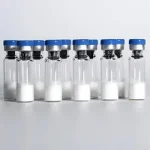
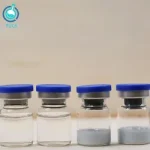
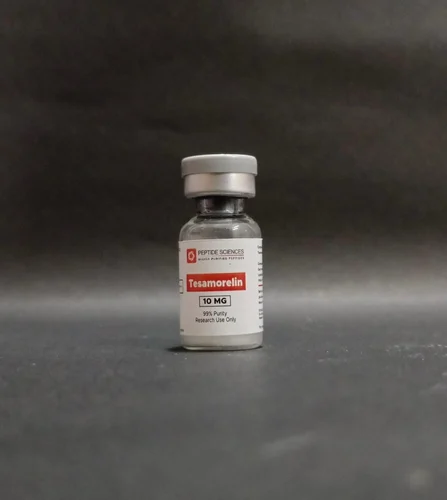
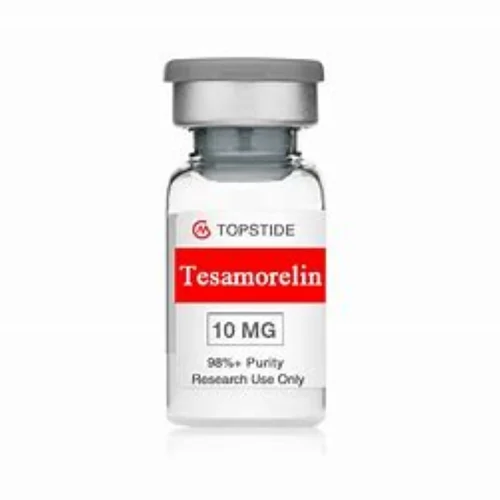
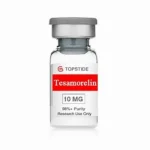
The product is available in various strengths, with Tesamorelin 5mg being a common formulation used in clinical practice . A Tesamorelin 5mg vial contains the sterile injectable peptide in lyophilized powder form, designed for reconstitution and subcutaneous administration .
Mechanism of Action of Tesamorelin {#mechanism-of-action-tesamorelin}
The mechanism of action of Tesamorelin is rooted in its ability to mimic the body’s natural growth hormone-releasing hormone, restoring physiological growth hormone secretion .
How Tesamorelin Works
In vitro, Tesamorelin binds and stimulates human GRF receptors with similar potency as the endogenous GRF . GRF is a hypothalamic peptide that acts on pituitary somatotroph cells to stimulate the synthesis and pulsatile release of endogenous growth hormone (GH), which is both anabolic and lipolytic .
Key aspects of Tesamorelin’s mechanism include:
-
Natural Pulsatile Release: Tesamorelin induces GH secretion in a natural and pulsatile way, mimicking the physiological rhythm of the body’s own GH release .
-
Preserved Feedback Mechanism: The natural synthesis of GH is regulated by a feedback mechanism preventing its overproduction. Tesamorelin induces optimal activity of the somatotrope function while retaining this feedback mechanism. In contrast, exogenous administration of recombinant human GH (rhGH) short-circuits these feedback mechanisms .
-
IGF-1 Mediation: GH exerts its effects by interacting with specific receptors on a variety of target cells, including chondrocytes, osteoblasts, myocytes, hepatocytes, and adipocytes. Some, but not all, of these effects are primarily mediated by insulin-like growth factor-1 (IGF-1) produced in the liver and peripheral tissues .
Targeted Lipolytic Action
Tesamorelin induces a lipolytic action that is capable of decreasing visceral adipose tissue (VAT) without significantly decreasing subcutaneous adipose tissue (SAT) . This is particularly important for HIV-infected patients with lipodystrophy, as the condition is often associated with lipoatrophy characterized by a reduction of SAT .
The reduction in visceral abdominal fat while preserving lean muscle mass is a key clinical benefit that makes Tesamorelin stand out among metabolic therapies .
FDA-Approved Indication for Tesamorelin {#fda-approved-indication-tesamorelin}
Primary Indication: HIV-Associated Lipodystrophy
Tesamorelin is indicated for the reduction of excess abdominal fat in HIV-infected patients with lipodystrophy . Lipodystrophy is a metabolic condition characterized by insulin resistance, fat redistribution (including visceral fat accumulation), and hyperlipidemia associated with antiretroviral therapy for HIV infection .
Important Limitation
Tesamorelin is not recommended for weight loss . Its use is specifically targeted at reducing visceral adipose tissue in the indicated patient population, not as a general weight loss agent.
Off-Label Use Considerations
While the FDA-approved indication remains HIV-associated lipodystrophy, some clinicians consider Tesamorelin for patients with stubborn abdominal fat that resists diet and exercise, or individuals with metabolic syndrome features or significant visceral adiposity under supervision . However, these applications should be guided by clinical judgment and are not FDA-approved.
Tesamorelin 5mg Clinical Efficacy Data {#clinical-efficacy-tesamorelin}
Clinical trials have demonstrated the efficacy of Tesamorelin in reducing visceral adipose tissue and improving metabolic parameters.
Phase 3 Clinical Trial Results
The pivotal Phase 3 trials (Study 10 and Study 11) evaluated Tesamorelin 2 mg/day versus placebo over 26 weeks :
| Outcome | Tesamorelin (N=543) | Placebo (N=263) |
|---|---|---|
| VAT Change at Week 13 | -12.0% LSM | -0.6% LSM |
| VAT Change at Week 26 | -15.9% LSM | +0.1% LSM |
| Waist Circumference Change | -2.4 cm | -0.8 cm |
Key Clinical Findings
-
Sustained VAT Reduction: At Week 26, the Tesamorelin group demonstrated a mean percent reduction in VAT of approximately 15.9% compared to placebo .
-
No Clinically Significant SAT Change: The mean change from baseline in abdominal subcutaneous tissue (SAT) was not significantly different between Tesamorelin and placebo subjects, confirming the targeted visceral fat reduction .
-
Lean Body Mass Increase: Tesamorelin treatment resulted in a statistically significant increase in lean body mass (+1.27 kg) compared to placebo (-0.14 kg) at Week 26 .
-
Reduced Total and Trunk Fat: The mean change in total fat at Week 26 was -0.98 kg in the Tesamorelin group versus +0.46 kg in the placebo group. Trunk fat decreased by -0.90 kg with Tesamorelin versus +0.28 kg with placebo .
Long-Term Efficacy (52-Week Extension)
In patients who continued Tesamorelin for 52 weeks (T-T group), the sustained decrease from baseline in VAT was maintained, with a mean percent decrease of 17.5% for pooled data . Patients who discontinued Tesamorelin at Week 26 (T-P group) experienced VAT re-accumulation, with a mean percent increase from baseline of 0.28% .
Tesamorelin 5mg Dosing and Administration {#dosing-administration-tesamorelin}
Standard Dosing
The recommended dose of Tesamorelin is 2 mg (two milligrams) administered once daily by subcutaneous injection . At a concentration of 5 mg/mL, a Tesamorelin 5mg vial typically provides enough medication for 2.5 days of treatment .
Administration Instructions
-
Reconstitution: The sterile injectable formulation should be reconstituted according to manufacturer instructions .
-
Injection Site: Tesamorelin is injected subcutaneously, often in the abdomen, with rotation of injection sites to minimize local reactions .
-
Storage: Vials of Tesamorelin should remain refrigerated when not in active use .
-
Patient Selection: Typical dosing ranges from one to two milligrams daily based on clinician judgment .

Tesamorelin Side Effects and Safety Profile {#side-effects-tesamorelin}
Common Adverse Events
Clinical trials have characterized the safety profile of Tesamorelin:
| Adverse Event | Tesamorelin (N=543) | Placebo (N=263) |
|---|---|---|
| Arthralgia | 13.3% | 11.0% |
| Injection site erythema | 8.5% | 2.7% |
| Injection site pruritis | 7.6% | 0.8% |
| Extremity pain | 6.1% | 4.6% |
| Peripheral edema | 6.1% | 2.3% |
| Myalgia | 5.5% | 1.9% |
| Paresthesia | 4.8% | 2.3% |
| Hypoesthesia | 4.2% | 1.5% |
GH-Related Adverse Events
Adverse events known to be related to growth hormone effects were more common in Tesamorelin-treated subjects (25.6%) compared to placebo (13.7%) . These included:
-
Extremity pain
-
Peripheral edema
-
Myalgia
-
Paresthesia
-
Hypoesthesia
-
Carpal tunnel syndrome
-
Joint stiffness
Hypersensitivity Reactions
Twenty-eight patients were identified as having developed hypersensitivity reactions; 27 were treated with Tesamorelin and only one received placebo . Most hypersensitivity cases (24/27, 89%) occurred within the first six months of exposure to Tesamorelin . Symptoms included injection site reactions progressing to systemic symptoms such as:
-
Nausea
-
Palpitations/tachycardia
-
Light-headedness/dizziness
-
Hot flush/flushing
-
Sweating
-
Dyspnea
-
Headache
-
Tongue edema
IGF-1 Level Effects
Tesamorelin treatment increases IGF-1 levels above the normal range in many patients :
| Parameter | Tesamorelin | Placebo |
|---|---|---|
| Baseline IGF-1 SDS > +2 | 6.2% | 6.1% |
| Week 26 IGF-1 SDS > +2 | 47.4% | 5.0% |
| Week 26 IGF-1 SDS > +3 | 35.6% | 2.5% |
Tesamorelin vs. Recombinant Growth Hormone {#tesamorelin-vs-rhgh}
The safety profiles of recombinant human growth hormone (rhGH) and Tesamorelin appear to be very different .
Key Differences
| Aspect | Tesamorelin | Recombinant GH |
|---|---|---|
| GH Secretion Pattern | Natural, pulsatile | Supraphysiological, constant elevation |
| Feedback Mechanism | Preserved | Short-circuited |
| Side Effects | Fewer GH-related AEs | More frequent side effects |
| Hyperglycemia Risk | Lower | Higher |
Advantages of Tesamorelin
-
Preserved Natural Rhythm: Tesamorelin induces optimal activity of the somatotrope function and retains the natural rhythm (pulsatility) of physiological GH secretion without interfering with the feedback mechanism .
-
Lower Side Effect Profile: The side effects associated with rhGH include nerve, muscle, or joint pain, swelling due to fluid retention (edema), carpal tunnel syndrome, numbness and tingling of skin, and increased risk of diabetes. These side effects are particularly frequent among older people. In addition, rhGH can cause hyperglycemia, making it contraindicated for patients with diabetes or pre-diabetic conditions .
-
Targeted Action: Unlike rhGH, which can cause various metabolic disturbances, Tesamorelin offers more targeted effects on visceral adipose tissue reduction .
Frequently Asked Questions (FAQs) {#tesamorelin-faqs}
1. What is Tesamorelin used for?
Tesamorelin is FDA-approved for the reduction of excess abdominal fat in HIV-infected patients with lipodystrophy . It is not recommended for general weight loss .
2. How does Tesamorelin work?
Tesamorelin is a growth hormone-releasing hormone analogue that stimulates the pituitary gland to release growth hormone in a natural, pulsatile manner . This stimulates lipolysis, reducing visceral adipose tissue while preserving lean muscle mass .
3. What is the difference between Tesamorelin and growth hormone?
Tesamorelin stimulates the body’s own production of growth hormone, preserving the natural feedback mechanism. Recombinant growth hormone therapy bypasses this mechanism, leading to supraphysiological GH levels and more side effects .
4. Is Tesamorelin FDA-approved?
Yes, Tesamorelin (brand name Egrifta) was approved by the FDA in 2010 for HIV-associated lipodystrophy .
5. What are the side effects of Tesamorelin?
Common side effects include joint pain (arthralgia), injection site reactions (erythema, pruritis), extremity pain, peripheral edema, myalgia, paresthesia, and hypoesthesia . Hypersensitivity reactions may occur, most commonly within the first six months .
6. What is the dose of Tesamorelin?
The recommended dose is 2 mg administered once daily via subcutaneous injection .
7. What is a Tesamorelin 5mg vial?
A Tesamorelin 5mg vial contains 5 mg of the peptide in lyophilized powder form, designed for reconstitution. At a concentration of 5 mg/mL, a Tesamorelin 5mg vial provides enough for 2.5 days at the standard 2 mg daily dose .
8. Can healthy individuals use Tesamorelin for fat loss?
Tesamorelin is not approved for use outside HIV-associated lipodystrophy. It is not recommended for general weight loss . Off-label use should only be considered under strict medical supervision .
9. How long does Tesamorelin treatment take to show results?
Clinical trials demonstrated significant VAT reduction by Week 13 and Week 26 . Discontinuation leads to VAT re-accumulation, suggesting ongoing treatment is needed to maintain benefits .
10. Does Tesamorelin affect blood sugar?
Tesamorelin has less impact on blood glucose compared to recombinant growth hormone therapy because it preserves the natural feedback mechanism . However, monitoring glucose levels is still recommended.
Final Verdict {#tesamorelin-final-verdict}
Tesamorelin represents a significant therapeutic innovation for patients with HIV-associated lipodystrophy, offering the first and only FDA-approved option for reducing excess abdominal fat in this population. As a 44-amino acid stabilized peptide analogue of human GHRH, Tesamorelin works by restoring the body’s natural pulsatile growth hormone secretion, promoting visceral adipose tissue reduction while preserving lean muscle mass.
Key Takeaways
-
First-in-Class Therapy: Tesamorelin is the first and only FDA-approved treatment for reduction of excess abdominal fat in HIV-infected patients with lipodystrophy .
-
Targeted Visceral Fat Reduction: Clinical trials demonstrate that Tesamorelin reduces visceral adipose tissue by approximately 15-18% while not significantly affecting subcutaneous fat .
-
Natural Mechanism: Tesamorelin stimulates endogenous growth hormone in a physiological, pulsatile manner, preserving the body’s natural feedback mechanisms .
-
Favorable Safety Profile: While Tesamorelin has side effects including arthralgia, injection site reactions, and GH-related effects, its safety profile compares favorably to recombinant growth hormone therapy .
-
Important Limitations: Tesamorelin is not recommended for weight loss and is specifically indicated for HIV-associated lipodystrophy .
-
On-Going Treatment Required: Discontinuation of Tesamorelin leads to VAT re-accumulation, suggesting long-term treatment is needed to maintain benefits .
For eligible patients with HIV-associated lipodystrophy, Tesamorelin 5mg formulations provide a targeted and effective treatment option that addresses a significant unmet medical need. As with any prescription medication, Tesamorelin should be used under the guidance of a qualified healthcare provider who can monitor for side effects and ensure optimal outcomes.
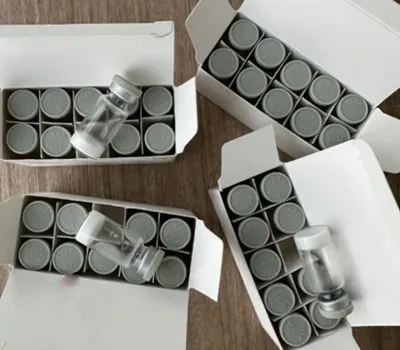
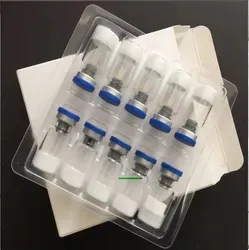
| Tesamorelin |
5mg*10vials ,10mg*10vials |
|---|







Reviews
There are no reviews yet.