

Fast Delivery
Quick, reliable shipping to any location.

Free & easy returns
Return this item by mail or in store within 90 days for a full refund.
SS-31 (Elamipretide) – Product Description
The Mitochondria-Targeted Peptide for Cellular Bioenergetics and Cardioprotection Research
SS-31, also known as elamipretide or MTP-131, is a synthetic tetrapeptide (D-Arg-dimethylTyr-Lys-Phe-NH₂) designed to selectively target the inner mitochondrial membrane . As the first FDA-approved mitochondria-targeted drug, SS-31 represents a significant advancement in research focused on mitochondrial dysfunction, oxidative stress, and bioenergetic failure . This cell-permeable, aromatic-cationic peptide is estimated to concentrate 1,000- to 5,000-fold within the mitochondria, where it preserves cristae integrity, enhances ATP production, and reduces mitochondrial reactive oxygen species (ROS) .
Table of Contents
-
What is SS-31?
-
Mechanism of Action
-
Key Research Findings
-
Product Specifications
-
Dosing and Administration
-
Safety Profile
-
Frequently Asked Questions (FAQs)
-
References
What is SS-31?
SS-31 (elamipretide) is a synthetic tetrapeptide discovered through the collaborative work of Dr. Peter W. Schiller at the Montreal Clinical Research Institute and Dr. Hazel Szeto at Weill Cornell Medical College . It belongs to a class of molecules known as Szeto-Schiller (SS) peptides, which were designed to localize specifically to the inner mitochondrial membrane—the site of cellular energy production .
| Property | Detail |
|---|---|
| Synonyms | Elamipretide, MTP-131, Bendavia, Forzinity™ |
| Sequence | H-D-Arg-Tyr(2,6-diMe)-Lys-Phe-NH₂ (Short: RXKF) |
| Molecular Formula | C₃₄H₅₃N₉O₇ |
| Molecular Weight | ~699.84 Da |
| CAS Number (Acetate) | 1334953-95-5 |
| Purity (Research Grade) | ≥98% (HPLC) |
| Form | Lyophilized powder (acetate salt) |
| Solubility | Soluble in water |
| Storage | -20°C, protected from moisture and light |
FDA Approval Status
In September 2025, the U.S. Food and Drug Administration granted accelerated approval to Forzinity™ (elamipretide) injection as the first treatment for Barth syndrome—a rare, serious, and life-threatening mitochondrial disease affecting cardiolipin metabolism . This approval is for patients weighing at least 30 kg.

Mechanism of Action
SS-31 functions through targeted binding to cardiolipin, a phospholipid unique to the inner mitochondrial membrane that is critical for organizing the electron transport chain (ETC) into supercomplexes .
| Mechanism | What It Does | Why It Matters |
|---|---|---|
| Cardiolipin Stabilization | Binds selectively to cardiolipin via electrostatic and hydrophobic interactions, stabilizing mitochondrial membrane structure | Preserves cristae integrity and prevents cytochrome c peroxidase activity that degrades cardiolipin |
| ROS Reduction | Scavenges and reduces mitochondrial reactive oxygen species production | Protects cells from oxidative damage implicated in neurodegeneration and aging |
| ATP Enhancement | Restores and increases mitochondrial ATP synthesis by preserving electron transport chain function | Supports cellular energy metabolism |
| mPTP Inhibition | Prevents opening of the mitochondrial permeability transition pore during stress | Protects against cell death in ischemia-reperfusion injury |
| Anti-Inflammatory Effects | Inhibits NLRP3 inflammasome activation and LPS-stimulated IL-1β production in macrophages | Reduces neuroinflammation and inflammatory responses |
SS-31 binds to cardiolipin with an apparent affinity of approximately 2.9 µM and can modulate cardiolipin-protein interactions . This interaction preserves cristae integrity, reduces ROS production, and maintains ATP synthesis .
Key Research Findings
FDA Approval for Barth Syndrome
The landmark regulatory milestone for SS-31 came in September 2025, when the FDA granted accelerated approval for Forzinity™ (elamipretide) to improve muscle strength in adult and pediatric patients with Barth syndrome weighing at least 30 kg .
Parkinson’s Disease and Neurodegeneration Research
Recent studies demonstrate that SS-31 may attenuate α-synuclein-induced mitochondrial impairment—a hallmark of Parkinson’s disease pathology. Research shows SS-31 displaces α-synuclein from lipid membranes, inhibits membrane-induced aggregation, and restores impaired mitochondrial function in neuroblastoma cells treated with α-synuclein oligomers . SS-31 also demonstrates blood-brain barrier permeability, supporting its potential for central nervous system applications .
Neuroinflammation and Mitochondrial Protection
A 2024 study exploring novel SS-31 derivatives found that SS-31 reduces LPS-induced inflammation in BV2 microglial cells and increases ATP synthesis in rotenone-damaged neuronal cells . SS-31 treatment at 50 nM attenuated mitochondrial ROS production by preserving mitochondrial integrity .
Skin Photodamage Research
A novel delivery strategy using milk-derived exosomes loaded with SS-31 (Exo-SS31) has shown promise in mitigating UV-induced photodamage. Exo-SS31 significantly reduces oxidative stress, regulates SOD and GSH levels, inhibits MMP-1/3 expression, and prevents collagen degradation .
Kidney Disease Research
SS-31 has demonstrated protective effects in kidney disease models by scavenging ROS, increasing ATP supply, reducing cytochrome C release, and inhibiting mPTP opening and calcium overload .
Clinical Trial Outcomes
| Indication | Phase | Result |
|---|---|---|
| Barth Syndrome | Phase 2/3 / Accelerated Approval | FDA-approved as first treatment (2025) |
| Heart Failure | Phase 3 (EMPOWER) | Did not meet primary endpoints |
| Primary Mitochondrial Myopathy | Phase 3 (MMPOWER-3) | Did not meet primary endpoints; trial terminated |
| Primary Mitochondrial Myopathy | Phase 2 | 40 mg/day SubQ for 24 weeks showed no significant effect |
| Chronic Progressive External Ophthalmoplegia (CPEO) | Expanded Access | Dramatic symptom improvement after 2 weeks |
Product Specifications
| Specification | Detail |
|---|---|
| Product Name | SS-31 (Elamipretide Acetate) |
| Synonyms | MTP-131, Bendavia, Forzinity™ |
| Grade | Research Use Only (RUO) |
| Purity | ≥98% (HPLC) |
| Form | Lyophilized powder (acetate salt) |
| Sequence | H-D-Arg-Tyr(2,6-diMe)-Lys-Phe-NH₂ |
| Molecular Weight | ~699.84 Da |
| CAS Number | 1334953-95-5 (acetate salt) |
| Net Charge | +3 (at neutral pH) |
| Storage | -20°C, protected from moisture |
Dosing and Administration
Research Protocols
| Aspect | Detail |
|---|---|
| Route | Subcutaneous injection (primary research route); Intravenous (clinical trials) |
| Clinical Trial Doses | 4–40 mg once daily SubQ; 40 mg/day in Phase 3 trials |
| Intravenous Infusion | 0.01–0.25 mg/kg/hr over 4 hours |
| Preclinical Doses | 0.5–10 mg/kg SC/IV/IP (rats/mice); 0.05–0.1 mg/kg IV (rabbits) |
Reconstitution and Storage
-
Reconstitution: Dissolve lyophilized powder in sterile water or appropriate buffer.
-
Storage: Lyophilized powder should be stored at -20°C, protected from moisture and light.
-
Stability: Peptide is water-soluble and excreted by the kidneys .
Important Considerations
-
Treatments longer than 4 weeks have not been extensively studied in humans; long-term safety is not fully established
-
Due to poor oral bioavailability, SS-31 is generally administered via injection
-
The FDA-approved indication (Barth syndrome) uses a 40 mg daily subcutaneous injection
Safety Profile
SS-31 is generally well-tolerated at research and clinical doses, with adverse events typically mild and transient.
Common Side Effects
| Category | Specific Effects |
|---|---|
| Injection Site | Pain, erythema (57%), pruritus (47%), swelling, bruising, induration |
| Neurological | Headache, dizziness |
| Constitutional | Nausea, fatigue |
Clinical Trial Safety Data
-
MMPOWER-2 (Primary Mitochondrial Myopathy, 40 mg/day SC): Injection site reactions reported in 80% of subjects; most mild. No serious adverse events or deaths reported .
-
Heart Failure Trial (4–40 mg/day SC, 28 days): Well-tolerated; no significant changes in blood pressure, heart rate, or ECG intervals .
-
Phase 1 Studies: Well-tolerated across a wide IV dose range (0.01–0.25 mg/kg/hr) with no serious adverse effects .
Safety Considerations
-
FDA-Approved Only for Barth Syndrome: Approval is for a specific rare disease; efficacy for other conditions is not established .
-
Clinical Trial Failures: Phase 3 trials for heart failure and primary mitochondrial myopathy did not meet primary endpoints .
-
Long-Term Safety: Studies beyond 4 weeks are limited .
-
Not a Dietary Supplement: SS-31 is a potent research peptide; it is not approved as a supplement for general “anti-aging” or longevity use .

Frequently Asked Questions (FAQs)
1. What is SS-31 used for in research?
SS-31 is studied for its effects on mitochondrial dysfunction, oxidative stress, and bioenergetic failure. Research applications include Barth syndrome, primary mitochondrial myopathy, heart failure, neurodegenerative diseases (Parkinson’s, Alzheimer’s), kidney disease, and skin photodamage .
2. What is the mechanism of action?
SS-31 binds to cardiolipin in the inner mitochondrial membrane, stabilizing mitochondrial structure, reducing ROS production, enhancing ATP synthesis, and inhibiting the mitochondrial permeability transition pore .
3. Is SS-31 FDA-approved?
Yes. In September 2025, the FDA granted accelerated approval for Forzinity™ (elamipretide) as the first treatment for Barth syndrome in patients weighing at least 30 kg .
4. Did SS-31 fail clinical trials?
SS-31 has shown mixed results. While it succeeded for Barth syndrome (FDA approval), Phase 3 trials for heart failure (EMPOWER) and primary mitochondrial myopathy (MMPOWER-3) did not meet their primary endpoints . Some researchers believe this may reflect trial design challenges (e.g., endpoints too difficult to change in severely ill patients) rather than lack of drug efficacy .
5. What are the side effects?
The most common side effect is injection site reaction (erythema, pruritus, pain). Other effects include headache, dizziness, nausea, and fatigue. These are generally mild and transient .
6. Is SS-31 available as an oral supplement?
No. SS-31 is a peptide with poor oral bioavailability. It requires injection (subcutaneous or intravenous) for effective delivery .
7. Can SS-31 cross the blood-brain barrier?
Yes. Research demonstrates SS-31 systematically shows blood-brain barrier permeability, supporting central nervous system effects in rodent models .
8. What are the storage requirements?
Lyophilized SS-31 should be stored at -20°C, protected from moisture and light. Reconstituted solutions should be used promptly.
References
-
Discovery of novel SS-31 derivatives as potent agents to ameliorate inflammation and increase mitochondrial ATP synthesis. ScienceDirect. 2024
-
Hazel Szeto, SS-31 peptide, FDA-approved mitochondria-targeted drug. Rapamycin Longevity News. 2025
-
Elamipretide Acetate Product Information. InvivoChem
-
Milk-derived exosome-loaded SS31 as a novel strategy to mitigate UV-induced photodamage. ScienceDirect. 2025
-
Mechanism of action of SS-31 against kidney disease. NIH/PMC
-
Peptides / Bioregulators – SS-31 Clinical Trial Discussion. Rapamycin Longevity News. 2024
-
Elamipretide Acetate Product Information (Chinese). InvivoChem
-
Major Medical Breakthrough in Rare Eye Disease – IRCM. Institut de recherches cliniques de Montréal. 2025
-
Therapeutic Peptide SS-31 Modulates Membrane Binding and Aggregation of α-Synuclein. Wiley Online Library. 2026
-
SS-31 Cognitive Vitality Research Summary. Alzheimer’s Drug Discovery Foundation
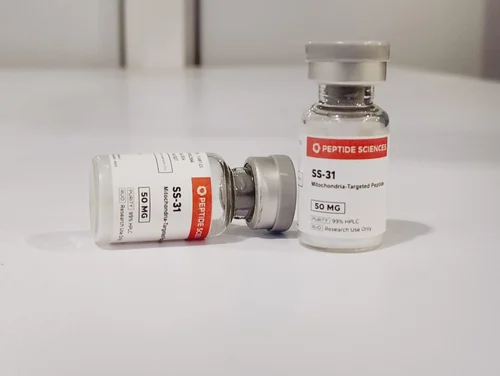
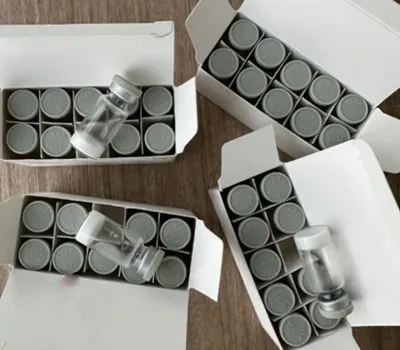
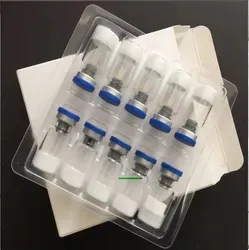
| SS-31 |
10mg*10vials ,50mg*10via;s |
|---|






Reviews
There are no reviews yet.