

Fast Delivery
Quick, reliable shipping to any location.

Free & easy returns
Return this item by mail or in store within 90 days for a full refund.
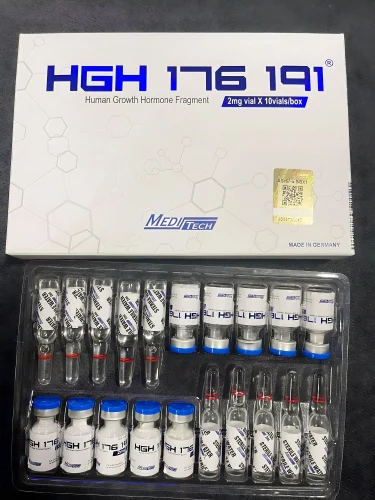
HGH Fragment 176-191: Research Peptide Profile
HGH Fragment 176-191, also known as the “lipolytic fragment” of human growth hormone, is a synthetic peptide corresponding to amino acids 176-191 of the C-terminal region of the HGH molecule. This fragment is structurally related to the better-known research peptide AOD9604 (fragment 177-191) and is of scientific interest for its hypothesized role in lipid metabolism without the broader hormonal effects associated with full-length growth hormone therapy.
What is HGH Fragment 176-191?
HGH Fragment 176-191 is a synthetic peptide derived from the C-terminus of human growth hormone. Its structure consists of 16 amino acids with a disulfide bridge between cysteine residues at positions 7 and 14, giving it the sequence: Tyr-Leu-Arg-Ile-Val-Gln-Cys-Arg-Ser-Val-Glu-Gly-Ser-Cys-Gly-Phe. The peptide is sometimes referred to as Tyr-hGH177-191.
The fragment was developed to investigate whether the fat-metabolizing properties of HGH could be separated from its systemic hormonal effects. Unlike full-length HGH, this fragment is hypothesized to selectively target pathways involved in lipid metabolism without significantly impacting insulin, glucose, or IGF-1 levels.
Mechanism of Action
Proposed Effects on Lipid Metabolism
Research interest in HGH Fragment 176-191 centers on its potential role in lipid metabolism. Studies suggest the peptide may promote lipolysis (the breakdown of stored fat) while inhibiting lipogenesis (the formation of new fat deposits). Investigations purport that by enhancing the expression of lipolytic enzymes and receptors, the peptide may provide insights into the mechanisms underlying fat metabolism.
Distinct Pathway from Full HGH
A key feature of this fragment is that it is believed to work through pathways distinct from those activated by full-length HGH. Unlike intact HGH, Fragment 176-191 and its related analog AOD9604 do not appear to activate growth hormone receptors or stimulate IGF-1 production in the same manner as full HGH therapy. This selectivity makes the fragment a valuable research tool for investigating fat metabolism independently of the broader hormonal effects associated with growth hormone.
Biological Activity
Research indicates that HGH Fragment 176-191 binds with high affinity to Ki-67, MiB protein, and estrogen receptors. In a 2022 study, researchers demonstrated that this fragment enhanced the toxicity of doxorubicin-loaded chitosan nanoparticles against MCF-7 breast cancer cells, suggesting potential applications in cancer research.
Research Applications
Metabolic and Obesity Research
The primary area of research for HGH Fragment 176-191 is metabolic regulation and obesity studies. The peptide has been proposed as a tool for investigating interventions to address adiposity and support metabolic function. In experimental models, Fragment 176-191 has been suggested to impact energy expenditure and fat oxidation pathways.
Early studies in rats demonstrated that the C-terminal fragments of HGH, including 176-191, could produce effects on blood glucose and insulin sensitivity. A 1978 study found that Fragment 176-191 produced a short-lived rise in blood glucose and a more sustained rise in plasma insulin at a single dose of 5 nmol/kg body weight. Among six C-terminal fragments tested (172-191, 176-191, 177-191, 178-191, 179-191, and 180-191), Fragment 176-191 was found to be the most effective at lowering blood sugar levels.
Cartilage and Tissue Regeneration Research
Emerging data suggest potential relevance of this fragment in regenerative science. The peptide is theorized to impact cellular repair and regeneration processes, particularly in tissues affected by injury or degeneration. Research has explored its potential to support collagen synthesis, extracellular matrix remodeling, and cartilage repair. A 2015 study in rabbits with induced knee osteoarthritis found that the structurally similar peptide AOD9604 enhanced cartilage regeneration.
Cancer Research
A 2022 study published in Drug Design, Development and Therapy examined the potential of HGH Fragment 176-191 in cancer research. Using in silico molecular docking simulations and in vitro validation in MCF-7 breast cancer cells, researchers found that the fragment enhanced the anti-proliferative activity of doxorubicin-loaded chitosan nanoparticles. This “dual-loading strategy” showed greater efficacy than doxorubicin-loaded nanoparticles alone, suggesting a potential role for the fragment in enhancing targeted cancer therapies.
Safety Profile
Published clinical studies specifically on HGH Fragment 176-191 are limited. However, research on the structurally similar peptide AOD9604 provides some insight into potential safety considerations:
From AOD9604 Studies:
-
No significant changes in IGF-1 levels were observed in clinical trials
-
No negative effects on carbohydrate metabolism or insulin sensitivity were reported
-
Unlike full HGH, AOD9604 does not appear to cause the pro-tumor or pro-diabetic effects associated with hGH injections
Reported Adverse Events from AOD9604 Dose-Escalation Study (15 subjects):
-
Headaches (6 occurrences)
-
Fatigue (4 occurrences)
-
Hypoglycemia unspecified (3 occurrences)
-
Dizziness (3 occurrences)
-
Nasopharyngitis (2 occurrences)
-
Cough (2 occurrences)
-
Single occurrences: lethargy, tonsillitis, abdominal pain, injection site pain, and others
Researchers concluded that AOD9604 was well tolerated in the concentration range of 25-400 µg/kg body weight, with a safety profile comparable to placebo.
Regulatory Status and Legal Considerations
FDA Status
HGH Fragment 176-191 is not FDA-approved for any human therapeutic indication. It is legally available only for research purposes.
WADA Prohibited Status
The peptide is banned by the World Anti-Doping Agency and other anti-doping organizations. A 2026 review on peptide use in sports notes that fragments like Frag 176-191 are marketed as “more selective and ostensibly safer alternatives” but remain prohibited substances.
Research-Use Only
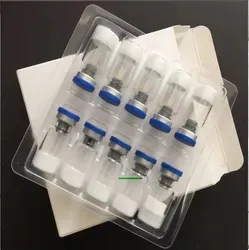
HGH Fragment 176-191 is available from research suppliers for laboratory and in vitro research use only. It is not legally marketed for human consumption.

Frequently Asked Questions
What is HGH Fragment 176-191?
HGH Fragment 176-191 is a synthetic peptide corresponding to the last 16 amino acids of the C-terminal region of human growth hormone. It is structurally related to the research peptide AOD9604 and is of scientific interest for studying lipid metabolism.
How does it differ from full HGH?
Unlike full HGH, Fragment 176-191 is believed to work through distinct pathways. It does not activate GH receptors or stimulate IGF-1 production in the same manner, which is why it is considered a research tool for studying fat metabolism independently of systemic hormonal effects.
What does research show about this peptide?
Research has investigated this fragment for its potential effects on lipid metabolism, cartilage regeneration, and even cancer research. Animal studies have shown it may impact blood glucose, insulin levels, and fat oxidation. A 2022 study found it could enhance the anti-cancer activity of doxorubicin against breast cancer cells.
Is HGH Fragment 176-191 FDA-approved?
No. It is not FDA-approved for any indication and is legally available for research purposes only.
Is it banned in sports?
Yes, it is prohibited by WADA as a peptide hormone and growth factor modulator.
Can I buy HGH Fragment 176-191?
It is available from research suppliers for laboratory use only. It is not legally marketed for human consumption.







Reviews
There are no reviews yet.