

Fast Delivery
Quick, reliable shipping to any location.

Free & easy returns
Return this item by mail or in store within 90 days for a full refund.
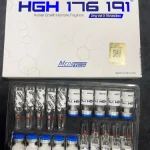
HGH Fragment 176-191: Research Peptide Profile
HGH Fragment 176-191 is a synthetic peptide corresponding to a 16-amino-acid segment at the C-terminal region of the human growth hormone (hGH) molecule. It has been investigated for its potential to selectively influence lipid metabolism without triggering the broader systemic effects associated with full-length hGH . This profile provides an overview of the peptide’s characteristics, research applications, and regulatory status.
What is HGH Fragment 176-191?
HGH Fragment 176-191 is a peptide consisting of amino acids 176 through 191 of the human growth hormone sequence. It is also known by the sequence: Tyr-Leu-Arg-Ile-Val-Gln-Cys-Arg-Ser-Val-Glu-Gly-Ser-Cys-Gly-Phe (with a disulfide bridge between Cys7 and Cys14) .
| Property | Detail |
|---|---|
| Molecular Formula | C₇₈H₁₂₃N₂₃O₂₃S₂ |
| Molecular Weight | 1815.08 g/mol |
| Status | Research compound; not FDA-approved for human use |
| Sequence | YLRIVQCRSVEGSCGF (Disulfide bridge: Cys7-Cys14) |
The peptide is structurally related to AOD-9604, a modified form that includes an additional tyrosine residue for stability, and is sometimes referred to as a “lipolytic fragment” due to its hypothesized effects on fat metabolism .

Mechanism of Action
Research suggests HGH Fragment 176-191 works through pathways that are distinct from those of full-length growth hormone. Unlike intact hGH, this fragment is believed to not activate growth hormone receptors or stimulate IGF-1 production in the same manner . This selectivity is a key area of interest, as it suggests the potential to study fat metabolism without the broader hormonal effects associated with hGH therapy .
Proposed Effects on Lipid Metabolism
The primary hypothesis driving research is that the peptide may promote lipolysis (the breakdown of stored fat) while inhibiting lipogenesis (the formation of new fat deposits). It may influence pathways involved in mobilizing fatty acids from adipose tissue and enhancing energy expenditure . Some research suggests potential interaction with intracellular signaling related to lipid turnover, such as the cAMP/PKA axis .
Binding Characteristics
The peptide has been shown to bind with high affinity to the Ki-67, MiB protein, and estrogen receptors, suggesting potential interactions beyond simple metabolic regulation .
Research Applications
Metabolic and Obesity Research
The primary area of focus for HGH Fragment 176-191 is its potential as a tool for studying lipid metabolism and energy balance. In experimental models, it has been shown to impact fat oxidation and energy expenditure pathways . Early studies in rats indicated that the fragment could produce a short-lived rise in blood glucose and a more sustained rise in plasma insulin, though these findings are from foundational research and require further investigation .
Cancer Research
A 2022 study published in Drug Design, Development and Therapy explored the peptide’s potential in oncology research. The investigation demonstrated that HGH Fragment 176-191, when loaded into chitosan nanoparticles along with the chemotherapy drug doxorubicin, enhanced the anti-proliferative activity against MCF-7 breast cancer cells compared to doxorubicin-loaded nanoparticles alone. This suggests a possible role in improving targeted drug delivery and efficacy .
Other Areas of Interest
Emerging data suggests potential relevance in:
-
Regenerative Science: The peptide is theorized to support cellular repair, collagen synthesis, and extracellular matrix remodeling .
-
Bone and Cartilage Research: Some investigations have explored its potential to support bone remodeling and cartilage repair mechanisms .
Safety and Legal Status
Safety Profile and Observed Effects
There are no published clinical studies on Fragment 176-191 itself. The safety profile is largely inferred from research on its close analog, AOD9604, which has undergone clinical trials.
-
From AOD9604 Studies: Data suggests that AOD9604 does not produce common hGH-related side effects like increased insulin resistance, edema, or increases in IGF-1 levels . However, in a dose-escalating study, a number of subjects reported adverse events including headaches, fatigue, dizziness, and injection site reactions .
-
Injection-Related Issues: As with many injectable peptides, there is a risk of local irritation or infection at the injection site .
Regulatory Status
| Aspect | Detail |
|---|---|
| FDA Status | Not approved for human use; available for research purposes only |
| Legal Status (UK/EU) | Considered an unlicensed medicine; illegal to sell for human consumption |
| Sports Status | Banned by the World Anti-Doping Agency (WADA) |
Quality and Safety Concerns
Given its status as an unregulated research compound, there are significant concerns regarding product quality. Purchasing from unverified sources carries risks of contamination, incorrect dosing, and lack of sterility, which can lead to adverse health consequences .
Frequently Asked Questions
What is HGH Fragment 176-191?
It is a synthetic peptide consisting of the last 16 amino acids of the human growth hormone molecule, primarily researched for its potential effects on lipid metabolism .
Is HGH Fragment 176-191 the same as AOD-9604?
They are structurally related but not identical. AOD-9604 is a modified version of the fragment with an added tyrosine residue for stability. Both are often discussed in the context of fat metabolism research .
Is HGH Fragment 176-191 approved for human use?
No. It is not FDA-approved and is legally available only for research purposes .
Is HGH Fragment 176-191 banned in sports?
Yes, it is a prohibited substance under WADA regulations, as it is considered a peptide hormone and growth factor modulator .







Reviews
There are no reviews yet.